
Hand Knotted Rugs: How to Make Them
Estimated reading time: 7 minutes
Key Takeaways
- Hand knotted rugs are unique textiles created through an intricate knotting process.
- Rug making dates back thousands of years; its historical significance is vast.
- Materials like wool, silk, or cotton are essential for quality.
- Understanding and applying traditional techniques is crucial for craftsmanship.
- The distinction between hand knotted and hand-tufted rugs can influence choices in purchases.
Table of contents
- Hand Knotted Rugs: How to Make Them
- Historical Background: Evolution of Rug Making
- Deep Dive into Hand Knotted Rugs: How They Are Made
- Traditional Materials and Tools
- Tips for Quality Workmanship
- Persian Rugs Techniques: Styles, Motifs, and Distinctive Features
- Craftsmanship Processes and Best Practices
- Conclusion: Integrating History, Technique, and Persian Craftsmanship
- FAQ
The craftsmanship of hand knotted rugs showcases a beautiful blend of art and tradition. This blog explores the history, techniques, and processes involved in this time-honored craft.
Historical Background: Evolution of Rug Making
Early Origins and Development
The history of rug making is rich, originating thousands of years ago in regions such as Central Asia and the Middle East. Over time, rugs transitioned from mere functional items to symbols of status and artistry, influenced by various cultures.
Key historical milestones in rug making include:
- Development of Knot Types
- The symmetrical (Turkish) knot is strong and durable, originating from Turkey.
- The asymmetrical (Persian) knot allows for intricate designs, a hallmark of Persian rugs.
- Several other variations exist, though fewer are common today. Source: Carpet-Wiki – Knotting
- Domestic Production
- Rugs were often woven at home, primarily by women, embedding craft into everyday life and local economies. Source: Carpet-Wiki – Knotting
- Evolving Techniques
- As artisans perfected their craft, they developed higher knot densities, resulting in complex, finely crafted rugs. Source: Carpet-Wiki – Knotting
These evolutions transformed rug making into a well-respected art form, especially within Persian and Anatolian cultures.
Deep Dive into Hand Knotted Rugs: How They Are Made
1. Design and Pattern Planning
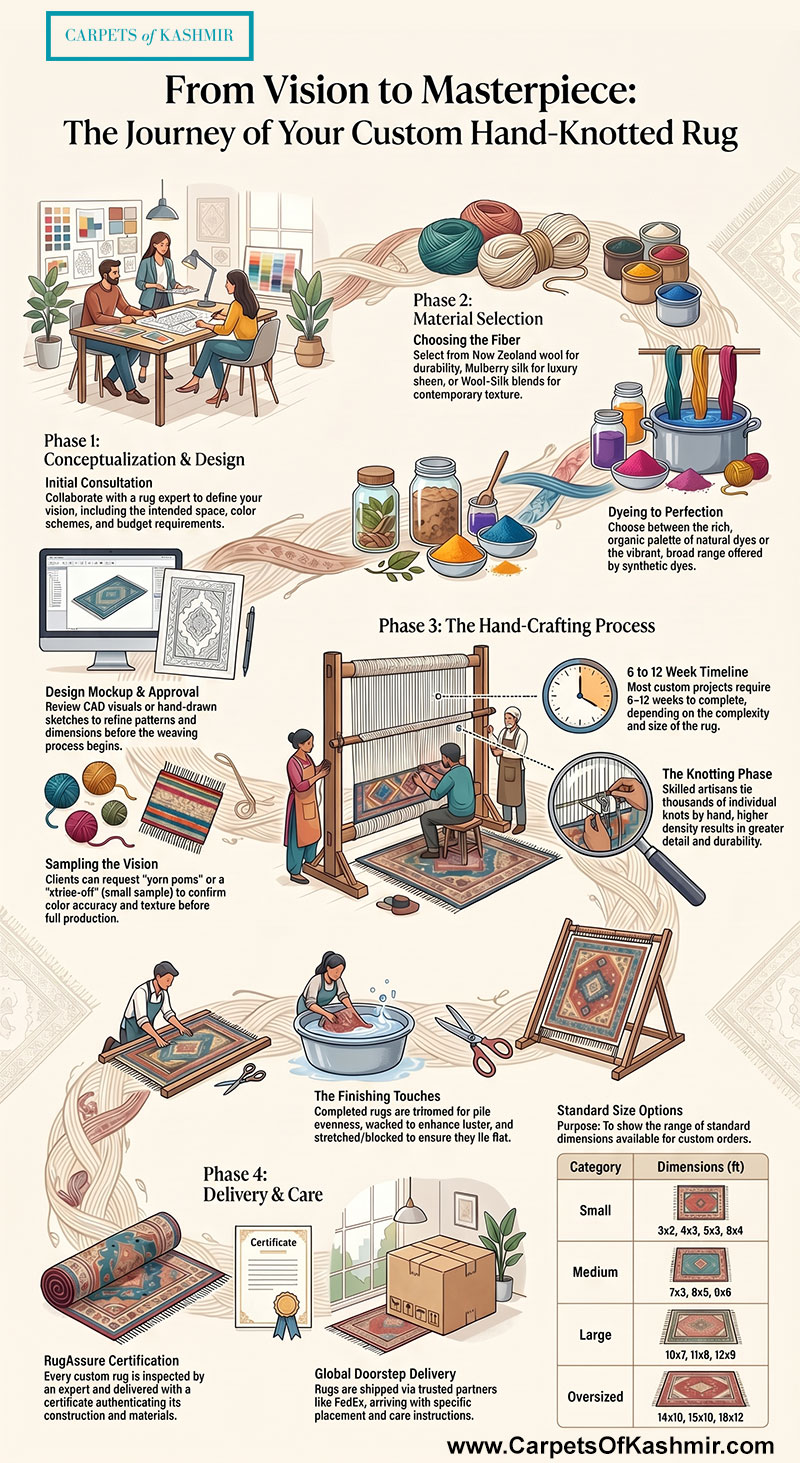
The creation journey of a hand knotted rug starts with careful design. Artisans develop a detailed pattern, based on traditional motifs or new inspirations, to guide the weaving process. Source: The Art of Persian Rug Weaving
2. Preparing Materials: Carding, Spinning, Dyeing
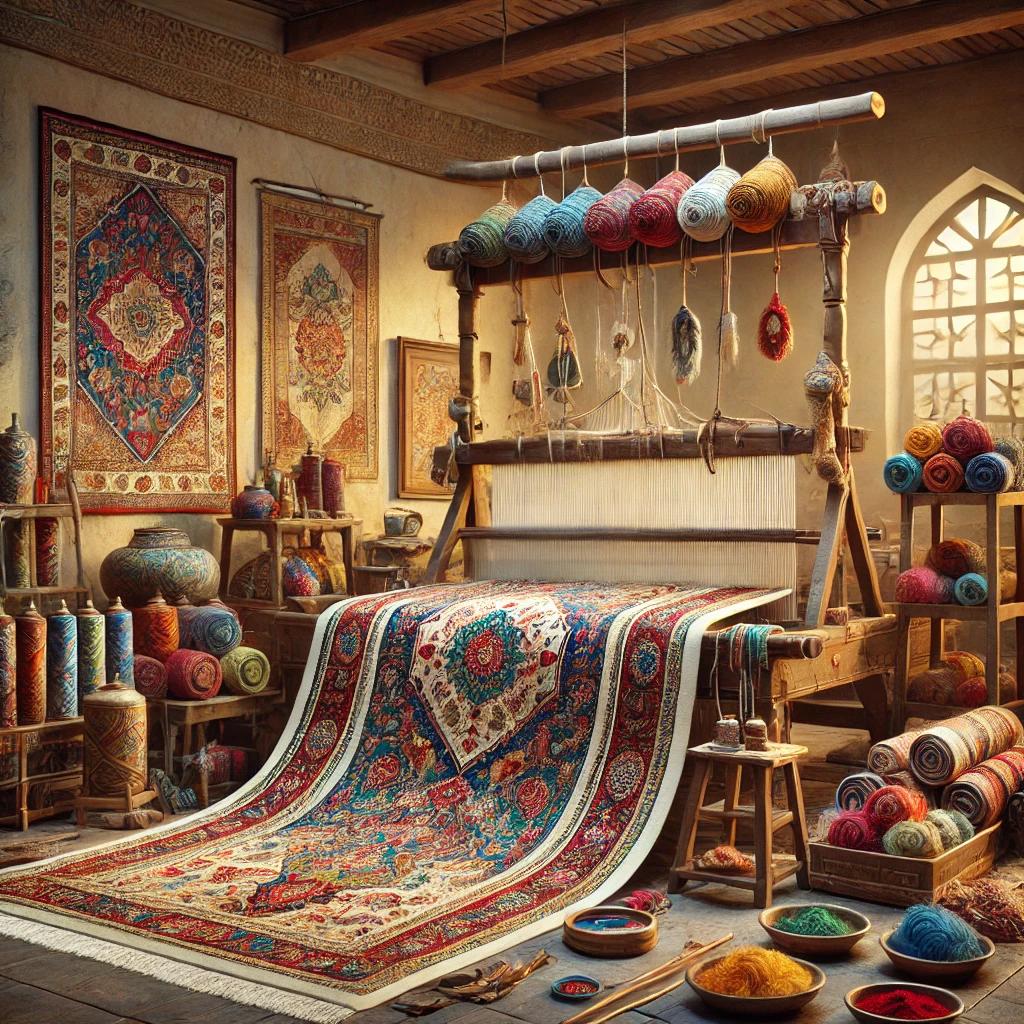
High-quality materials are vital for making beautiful hand knotted rugs. Artisans often use wool, silk, or cotton that is carded and spun into yarn. Source: Wendy Morrison Design
Natural dyes enrich colors and contribute to longevity. Artisans mix pigments to achieve vibrant shades. To delve deeper into this topic, read our guide on Testing Rug Dye Fastness at Home. Source: Wendy Morrison Design
3. Loom Setup: Warps and Wefts
The loom sets the base for weaving, with tight warp threads (usually cotton) establishing necessary tension for the process. Source: Wendy Morrison Design
Weft threads are woven horizontally through the warp, forming the rug’s structure. Source: Catalina Rug
4. Knotting: Building the Pile Row by Row
At the heart of hand knotted rugs is the detailed knotting process. Each knot is tied around warp threads according to the design, using either the symmetrical (Turkish) or asymmetrical (Persian) knot. This significantly impacts the rug’s overall look and feel. Source: Catalina Rug
An expert weaver can tie thousands of knots daily, showcasing the level of labor and skill that goes into crafting these textiles. For more on weaving distinctions, read Hand-Knotted vs. Hand-Tufted Rugs. Source: Catalina Rug
5. Cutting Off the Loom, Trimming, and Carving
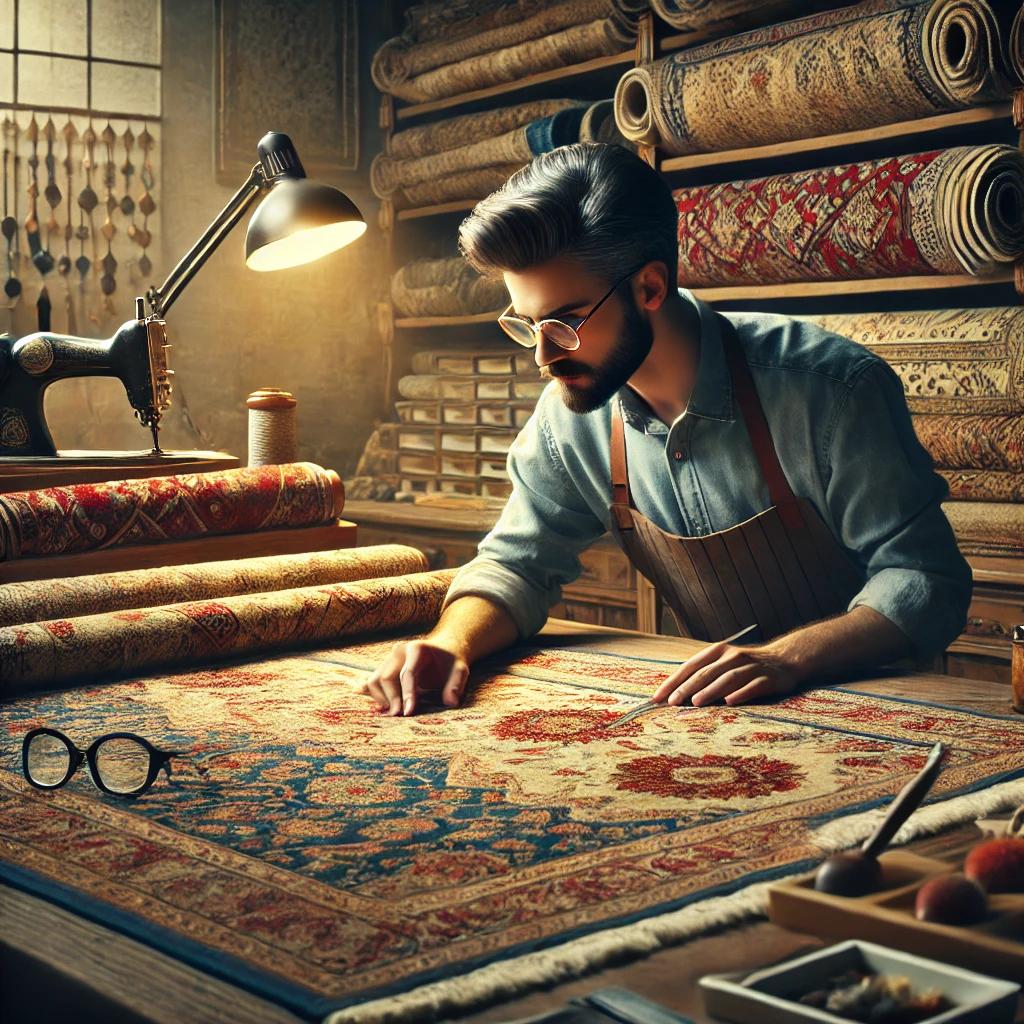
Once knotting is done, the rug is cut off the loom and shaped using scissors. Source: Wendy Morrison Design
Trimming is essential for even pile heights and clearer designs. Source: Wendy Morrison Design
6. Washing, Stretching, and Binding
Finally, the rug undergoes washing to eliminate dust and set colors. This process is crucial for achieving a vibrant final product. Source: Wendy Morrison Design
After washing, stretching the rug ensures it retains its shape. The edges are bound to enhance durability and finish the overall appearance. Source: Wendy Morrison Design
Traditional Materials and Tools
Crafting hand knotted rugs requires specific tools and materials:
- Warp threads: Made from sturdy cotton.
- Weft and pile fibers: Commonly wool, silk, or blended to enhance longevity and texture. Source: Catalina Rug
- Knotting tools: Include looms, scissors for trimming, and combs for packing knots. Source: Wendy Morrison Design
Grasping each material and tool is vital for producing high-quality rugs.
Tips for Quality Workmanship
To ensure exceptional craftsmanship in rug making, consider the following:
- Knot density: Higher knots per square meter lead to better detailing. Source: Catalina Rug
- Consistent tension: This is key for avoiding distortions. Source: Wendy Morrison Design
- Adhere to designs: Following the original design is crucial for precision. Source: Catalina Rug
Signs of high-quality craftsmanship include evenly visible knots on the backside, good color balance, and a sturdy fringe.
Persian Rugs Techniques: Styles, Motifs, and Distinctive Features
Persian Knot and Structural Technique
The Persian (asymmetrical) knot allows for detailed designs. This knot’s construction leads to intricate floral patterns within the rugs, enhancing their visual appeal and structure. Source: Carpet-Wiki – Knotting
Distinctive Styles and Motifs
Persian rug designs vary significantly, featuring:
- Medallion designs: Characterized by a center medallion with radiating patterns.
- All-over patterns: Repeated floral or geometric designs that span the rug. For insights into iconic patterns, read our article on The History and Significance of Persian Rug Patterns. Source: Tufenkian
These motifs often reflect cultural significance and regional heritage.
Comparison with Other Regional Styles
In comparing Persian rugs to others, the differences are notable:
| Aspect | Persian Rugs (Iran) | Turkish/Anatolian Rugs |
|---|---|---|
| Knot type | Asymmetrical (Persian) for intricate detailing | Symmetrical (Turkish) prioritized for strength |
| Typical design | Curvilinear, floral, decorative | Geometric with bold patterns |
| Knot density | Usually high | Varies; medium to high |
| Visual character | Fluid lines and intricate designs | Defined angles and color contrasts |
These distinctions illustrate the sophisticated artistry present in Persian rugs compared to other cultural weaving styles. Source: Tufenkian
Iconic Persian Rug Types and Skills Required
Prominent Persian rug types include:
- Tabriz Rugs: Renowned for their exquisite knotting and complex designs, requiring advanced knotting skills.
- Heriz Rugs: Show bold geometric patterns, demanding high proficiency in balancing scale and color. Source: Tufenkian
Replicating these renowned designs requires artisans with a deep understanding of diverse knotting techniques.
Craftsmanship Processes and Best Practices
Critical Steps and Technical Challenges
Artisans face technical challenges at various stages of rug making:
- Design translation errors can ripple through the production, affecting the final quality. Source: Wendy Morrison Design
- Inconsistent dyeing leads to uneven coloration, detracting from the rug’s vibrancy. Source: Wendy Morrison Design
- Maintaining consistent tension is vital; lack of monitoring can distort shapes. Source: Catalina Rug
Best Practices in Rug Making
Applying effective practices can boost rug quality:
- Utilize high-quality yarns for durability. Source: Wendy Morrison Design
- Employ natural dye processes for stable and rich colors. Source: Wendy Morrison Design
- Maintain a steady rhythm and pace during knotting for maximum efficiency. Source: Carpet-Wiki – Knotting
Preservation and Modern Adaptation of Traditional Techniques
Today’s rug making harmonizes traditional and contemporary methods:
- Processes such as carding, spinning, dyeing, and knotting are still crucial in top-tier rugs. Source: Wendy Morrison Design
- Artisans often incorporate digital tools for design accuracy, advancing traditional craftsmanship. Source: Wendy Morrison Design
- Workshops may produce both machine-made and hand-knotted rugs, with the latter being recognized for their unique attributes. Source: Tufenkian
Conclusion: Integrating History, Technique, and Persian Craftsmanship
In summary, the craft of rug making is a rich and evolving tradition. Each step—from design, material selection, through to craftsmanship—reflects the intricate artistry that defines hand knotted rugs.
By understanding how to make hand knotted rugs, we gain appreciation for the skill, time, and cultural richness embodied in these textile wonders. Whether they are beautiful artworks or functional items, each rug tells a story, carrying a legacy of craftsmanship that continues to flourish.
FAQ
What is the main difference between hand knotted and hand tufted rugs?
Hand knotted rugs are made by tying knots individually, leading to a highly durable product, while hand tufted rugs are created using a tufting gun, which can result in lower durability compared to hand knotted pieces.
How long does it typically take to make a hand knotted rug?
The production time varies, but it can take several months to years depending on the size and complexity of the design.
Can anyone learn to make hand knotted rugs?
Yes, anyone interested in learning can start with basic techniques; however, mastering the craft requires practice and dedication.
What types of materials are best for making rugs?
Natural fibers like wool, silk, and cotton are often preferred for their durability and aesthetic appeal.
How can I care for my hand knotted rug?
Regular cleaning, avoiding direct sunlight, and keeping it free from moisture will help maintain its beauty and longevity.