
Persian Rug Cleaning: The Essential Guide for At-Home Care
Estimated reading time: 7 minutes
Key Takeaways
- Persian rugs require specific care to maintain their beauty and structure.
- Understanding the material is crucial for choosing the right cleaning methods.
- Professional cleaning is recommended for high-value rugs to avoid damage.
- Routine maintenance can prolong the life of your rugs significantly.
- Immediate action on spills and stains is essential to prevent lasting damage.
Table of contents
Keeping your rugs clean is crucial for maintaining their beauty and longevity. Regular cleaning and upkeep can significantly enhance the lifespan of your rugs by efficiently removing dust, allergens, and pesky stains. This blog post will focus on Persian rug cleaning, a specialized technique that requires knowledge of the unique requirements of these exquisite textiles. Remember, the proper cleaning methods can vary based on the material and construction of your rugs. (Learn more about the rich artistry behind these textiles)
Understanding Different Rug Types
General Rugs: A Broad Category
General rugs encompass a wide range of products, including:
- Machine-made rugs
- Handmade rugs
- Synthetic floor coverings
- Natural-fiber textiles
Each type of general rug has its own characteristics and cleaning requirements.
Area Rugs: Defining the Portable Textile
Area rugs are smaller, portable rugs designed to cover specific portions of a room. They can be constructed from various materials, including:
- Polypropylene
- Nylon
- Wool
Understanding material differences is essential in determining appropriate cleaning methods.
Persian Rugs: The Unique and Valuable Craft
Persian rugs are a specific type of handmade rug originating from Iran and surrounding areas. They are often crafted from:
- Hand-knotted wool
- Cotton or wool foundations
- Occasionally silk details
These rugs are known for their intricate designs and quality, making them valuable items in any home. (For more background on the craftsmanship)
Wool Rug Durability: Key Features and Maintenance
Wool rugs offer great durability and absorbency. However, improper cleaning can cause significant damage, such as:
- Shrinkage
- Mildew
- Dye migration
Thus, understanding wool’s natural characteristics is vital for proper cleaning and maintenance. As noted by Home Depot, “Wool is absorbent, so over-wetting can lead to mildew, or dye migration.” (For additional guidance on protecting your wool investments)
General At-Home Rug Cleaning Guidelines
Essential Cleaning Tools
When cleaning rugs at home, it’s important to have the following tools on hand:
- Vacuum cleaner with suction control
- White, absorbent towels
- Soft sponge or microfiber cloth
- Two buckets
- Cooler water
- Wool-safe cleaner
Safety Precautions and Preparation Steps
Here are key safety precautions and preparation steps for effective rug cleaning:
- Read the care label: This will guide you on acceptable cleaning methods. (source)
- Identify the rug fiber: Understanding the fiber composition is crucial.
- Conduct a colorfastness test: This ensures that the colors won’t bleed during cleaning. (For a detailed guide on testing)
- Inspect for existing damage: Look for loose threads or fragile edges.
- Remove furniture and vacuum: Vacuum both sides of the rug where practical. (For more at-home cleaning tips)
- Never clean over untreated wood floors: Moisture from the cleaning process can damage the flooring underneath.
- Keep the rug only slightly damp: Over-saturation can cause damage.
- Dry thoroughly before returning the rug indoors: Incomplete drying can lead to mildew. (source)
In-Depth Guide to Persian Rug Cleaning
Professional Cleaning is Recommended
For valuable Persian rugs, it is wise to consult a professional cleaner. (Learn how to choose a specialist)
Step-by-Step Persian Rug Cleaning Instructions
- Document the rug: Take photos of its condition.
- Check construction: Look for structural weaknesses.
- Test dyes: Use a cool, damp cloth on inconspicuous areas. (For detailed dye testing techniques)
- Remove loose dirt: Gently shake or beat the rug outside.
- Vacuum carefully: Use suction instead of a rotating brush. (source)
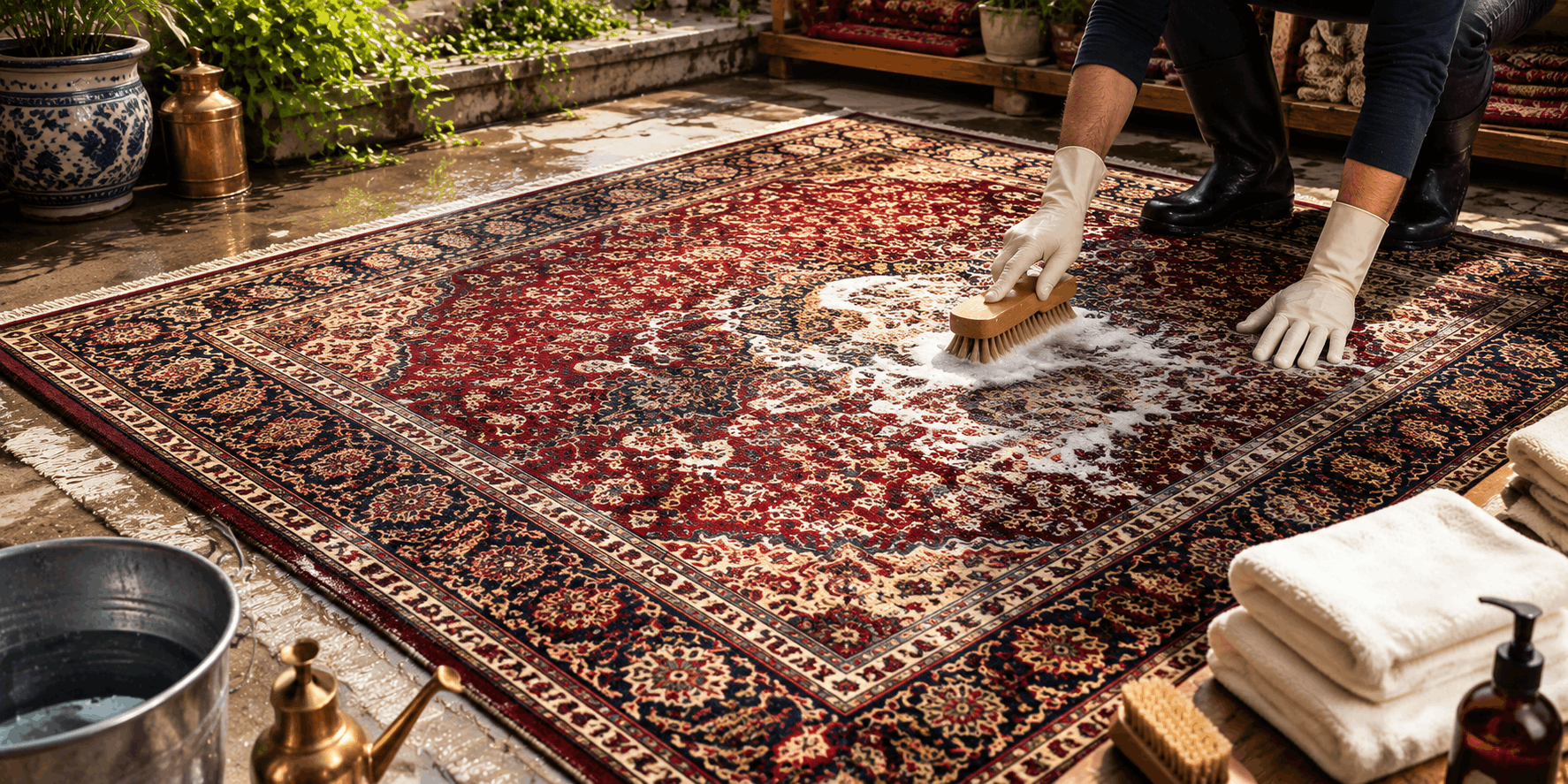
- Treat individual spots: Apply minimal moisture and a wool-safe cleaner.
- Clean in small sections: Use cool water and work in tiny areas.
- Rinse lightly: Use a clean damp sponge to remove detergent.
- Blot immediately to remove moisture.
- Dry using airflow methods: Use fans and ensure even drying on both sides. (source)
Persian Rug Cleaning Before and After: Visible Improvements
The before-and-after condition of a clearly cleaned Persian rug may highlight:
- Before: Dull pile, stains, and flattened areas.
- After: Bright, clean colors, a uniform pile, and restored fringe.
Proper cleaning should enhance both the rug’s appearance and its longevity without creating a harsh contrast that looks unnatural.
Cleaning Area Rugs vs. Persian Rugs
Comparison Table
| Concern | General Area Rug | Persian Rug |
|---|---|---|
| Routine vacuuming | Follow label | Use gentle suction, no beater |
| Spot treatment | Use diluted cleaner | Always test first; use minimal moisture |
| Whole-rug washing | Possible for some | Risky; may lead to dye bleeding |
| Agitation | Depends on rug | Keep friction minimal |
| Drying | Air-dry completely | Dry flat, avoid heated areas |
| Fringe care | Follow instructions | Handle with care |
| Professional cleaning | Needed for stains | Recommended for valuable rugs |
It is necessary to apply gentle care to Persian rugs given their complexity and value.
Maintaining Wool Rug Durability
Actionable Tips for Preserving Wool Rugs
To maintain wool rug durability, consider these tips:
- Vacuum regularly: High-traffic rugs should be vacuumed weekly, and low-traffic rugs every 1-2 weeks. (source)
- Use suction-only cleaning: Avoid rotating brushes.
- Rotate the rug: This prevents uneven wear.
- Use a rug pad: This protects against movement and abrasion.
- Blot spills promptly: Immediate action can help prevent stains.
- Apply minimal liquid: Less moisture is safer for wool.
- Avoid hot water and strong chemicals.
Following these practices can help wool rugs last a lifetime, maintaining both beauty and functionality. WoolSafe recommends adhering to these guidelines for effective maintenance. (source)
Case Studies and Visual Comparisons
Real-Life Examples of Effective Persian Rug Cleaning
Case Study 1: Light Traffic Soil on a Colorfast Wool Rug
- Before: Dull appearance, no visible dye transfer.
- Technique: Vacuumed thoroughly and used gentle cleaning methods.
- After: Improved color and definition.
Case Study 2: Fresh Beverage Spill on a Persian Rug
- Before: Localized wet mark, no damage detected.
- Technique: Prompt blotting and cleaning with minimal moisture.
- After: Stain visibility reduced, no residual halo.
Case Study 3: Antique Persian Rug with Unstable Dyes
- Before: Dye transfer during test.
- Recommended Action: Seek professional cleaning.
- After: Careful cleaning restored the rug’s beauty without risking damage.
Using consistent before-and-after photography can clearly illustrate the changes achieved through proper cleaning.
Conclusion
In summary, effective at-home Persian rug cleaning involves careful identification of the rug type, following care instructions, and employing the right cleaning techniques. While general area rugs may allow for more flexibility, Persian rugs, especially those made of wool or with intricate designs, require a more meticulous approach.
To properly care for your Persian rug, remember to test before cleaning, blot stains rather than scrub, and always ensure thorough drying. For complex cleaning needs or valuable rugs, consulting professional cleaners or using resources from certified guides is highly recommended. By focusing on these essential steps, your Persian rug can remain a stunning centerpiece in your home for centuries to come!
Frequently Asked Questions
How often should I clean my Persian rug?
It is recommended to clean your Persian rug at least once a year, depending on traffic and usage.
Can I use a vacuum cleaner on a Persian rug?
Yes, but use a vacuum with good suction and avoid beater bars to prevent damage.
What should I do if there is a stain?
Blot the stain immediately and use a wool-safe cleaner to treat it gently. Always test on an inconspicuous area first.
Should I professionally clean my rug?
For valuable and intricate rugs, it’s advisable to seek professional cleaning to avoid potential damage.