
The Timeless Elegance of Silk Persian Rugs: A Cultural Marvel
Estimated reading time: 7 minutes
Key Takeaways
- Silk Persian rugs are not just textiles but also cultural artifacts displaying rich traditions.
- They feature a fine, lustrous pile that allows for exquisite patterns and vibrant coloration.
- Silk rugs are often seen as investment pieces due to their quality and craftsmanship.
- Wool Persian rugs provide durability and practicality, making them ideal for everyday use.
- Persian rugs reflect profound artistic influences and hold significant historical value.
Table of contents
Introduction
Silk Persian rugs are exquisite pieces of art that embody the rich history and culture of Iran, dating back over 2,500 years. Renowned for their intricate designs and luxurious textures, these rugs serve as both functional textiles and cultural artifacts. Persian weaving traditions are not merely about creating beautiful items; they signify status, diplomacy, and artistry within Iranian society. This rich legacy offers a fascinating glimpse into the cultural tapestry of Persia, making silk Persian rugs a cherished part of both domestic spaces and the global art world.
For more on the historical significance of Persian rugs, visit Wikipedia, Oriental Rug Salon, and Let’s Go Persian.
Materials and Craftsmanship
Silk Persian: Characteristics, Advantages, and Uses
Characteristics of Silk Persian Rugs
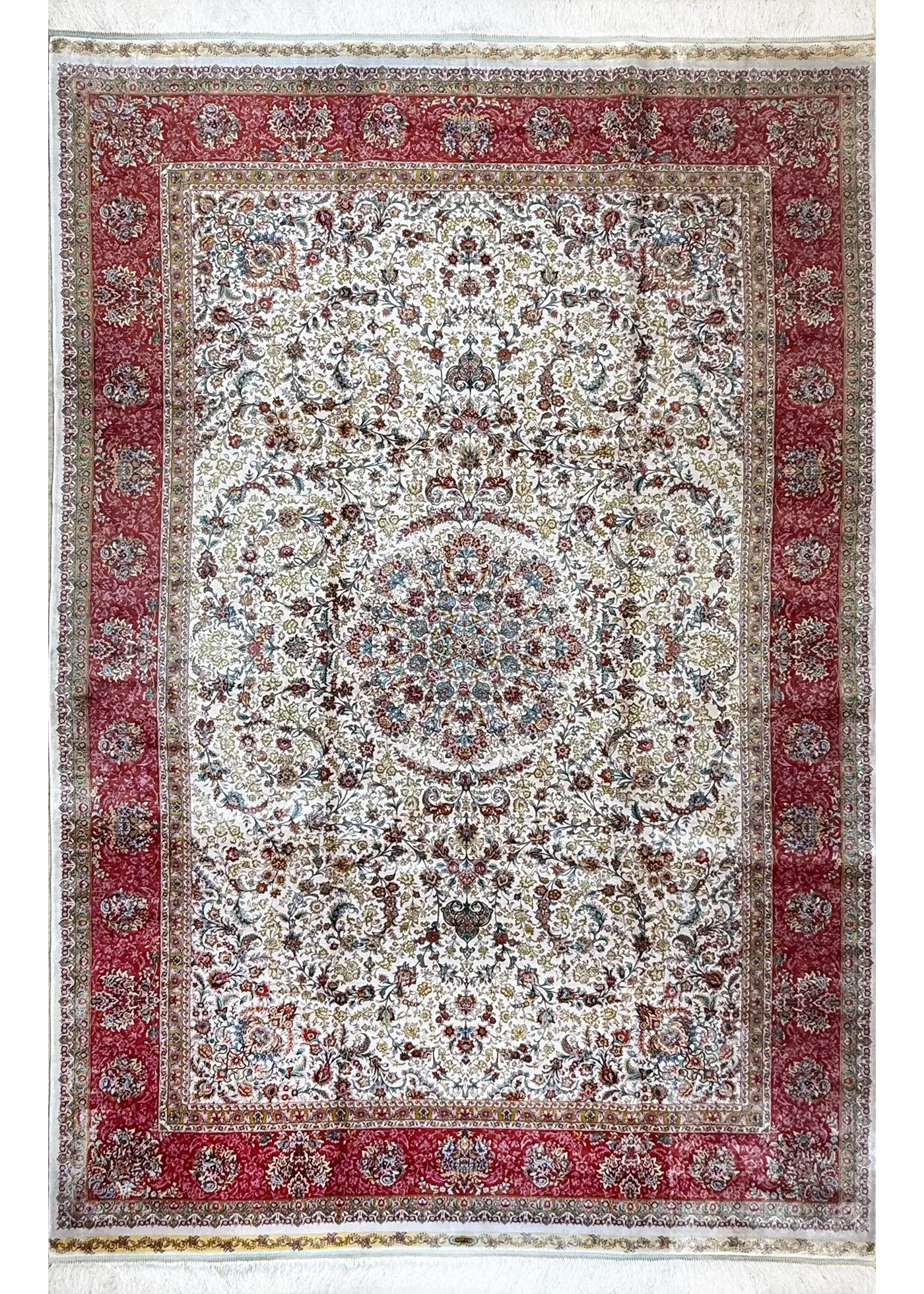
Silk Persian rugs are defined by their fine, lustrous pile that allows for exquisite patterns and vibrant colors. The high sheen of silk creates a shimmering effect that aesthetically enhances the patterns found in these rugs. This characteristic sets silk Persian rugs apart, giving them a divine quality that captivates collectors and decorators alike. The intricate weaving techniques make it possible to feature detailed designs, providing a striking visual experience.
For more insights into silk characteristics, check out McGill University, Catalina Rug, and Buy PRG.
Advantages of Silk Persian Rugs
One of the key advantages of silk is its ability to enable tight, high-density knots. This technique enhances the intricacy of details and depth in colors, resulting in visually compelling rugs that are unmatched in artistry. The fine materials used in silk Persian rugs allow artisans to achieve an extraordinary level of detail and beauty. Silk rugs often maintain their value and can be a worthwhile investment for collectors. For additional perspective on the investment value of handmade pieces, see Why Handmade Rugs Are a Better Investment Than Machine-Made Rugs.
Traditional Uses of Silk Persian Rugs
Silk Persian rugs are primarily used for decorative purposes rather than in high-traffic areas. They make ideal statement pieces for living rooms or as wall hangings, showcasing their beauty and value without risking damage. Due to their delicacy, it’s common to see these rugs offered as gifts of diplomacy or displayed in exhibitions and galleries rather than being placed in bustling environments. For guidance on identifying genuine silk Persian rugs, check out How to Identify an Authentic Persian Rug: A Buyer’s Guide.
Find more information regarding the uses of silk Persian rugs at Oriental Rug Salon.
Wool in Persian: Characteristics and Practical Uses
Contrast with Silk
Wool Persian rugs are known for their durability and resilience, making them suitable for everyday use. Unlike silk, which is delicate and expensive, wool is robust and can withstand the rigors of daily life, making these rugs ideal for high-traffic spaces like homes or offices. The natural properties of wool contribute to its stain resistance and warmth, contrasting sharply with the luxurious softness of silk.
For additional details, check McGill University and Heddels.
Why Wool is Widely Used
Wool has historical significance in Iran, where sheep have long been abundant. This availability has made wool a primary material for rug weavers. The versatility of wool allows artisans to create both finely crafted and rustic rugs tailored to various needs and settings. Wool’s accessibility supports the rich tradition of Persian weaving, playing a vital role in both the domestic and artistic landscapes. Explore more about wool’s significance in rug making at McGill University and Heddels.
Combined Use of Silk and Wool
In some instances, Persian rugs combine the luxurious silk with durable wool fibers. Such designs often highlight silk for intricate patterns against a wool background, creating a balance of beauty and strength. Cotton is also used for backing, adding stability to the rug without sacrificing its decorative appeal. This blended approach showcases the artisan’s skill while maximizing the qualities of both materials. For more insights, refer to Oriental Rug Salon.
Techniques and Traditional Methods
Persian Rugs Techniques: Weaving and Dyeing
Weaving and Knotting Techniques
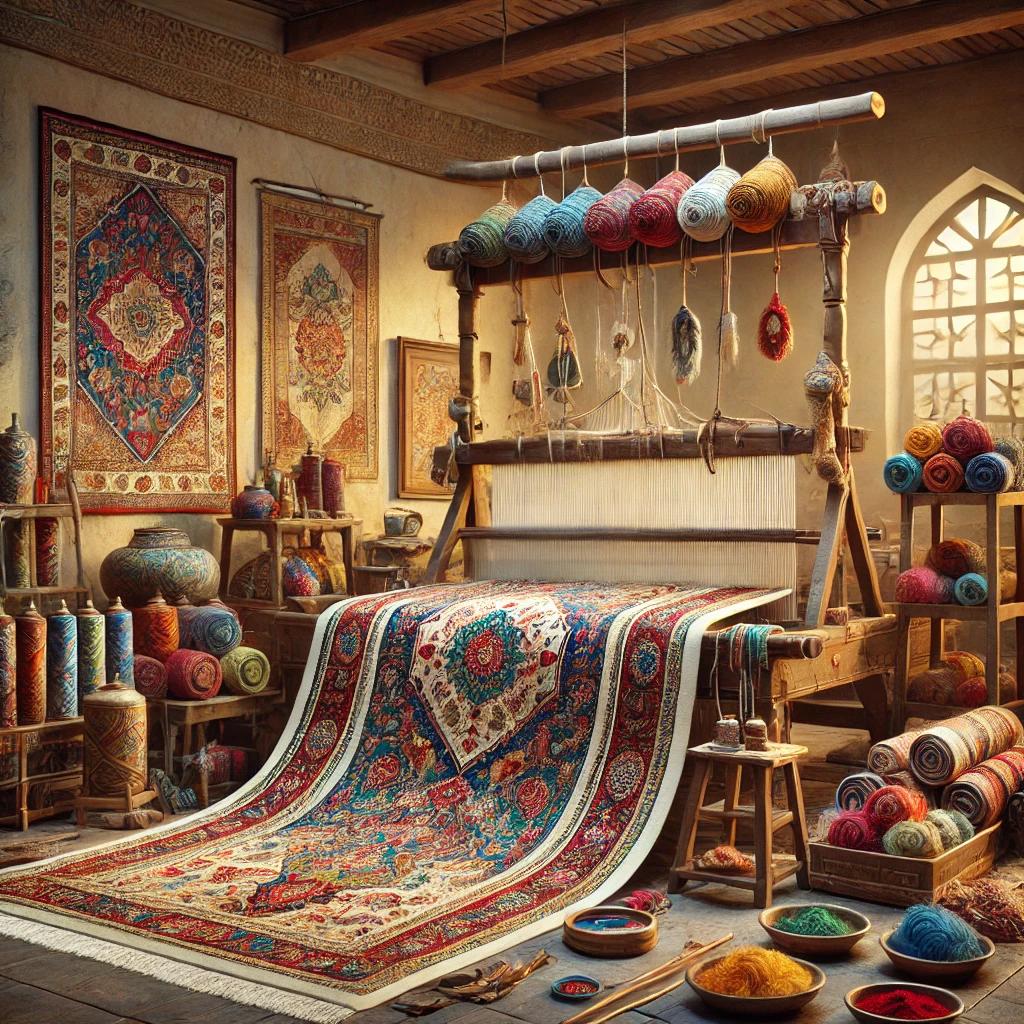
The most prevalent knot used in Persian rugs is the asymmetric “Persian” knot, also known as the Senneh knot. This particular technique allows for the creation of detailed, curvilinear designs, contributing to the unique aesthetics of these rugs. Artisans skillfully wrap knots around a foundation made from cotton or wool to craft durable yet intricate pieces. For a detailed comparison of hand-knotting and hand-tufted techniques, refer to Hand-Knotted vs. Hand-Tufted Rugs: What’s the Difference?.
Dyeing Methods
Persian rugs are also known for their stunning colors, achieved through traditional dyeing methods. Natural dyes derived from plants, insects, and minerals give these rugs unique color variations, often referred to as abrash. This hand-dyeing process creates subtle gradations in hues that enhance the visual depth of each rug, making each piece distinctively beautiful. Discover how colors can influence mood and ambiance in The Emotional Impact of Colors in Persian Rugs. Explore more about dyeing techniques at McGill University and Oriental Rug Salon.
Design Influences and Motifs in Persian Rugs
Persian rugs are renowned for their iconic designs, frequently featuring motifs of medallions, floral vines, and various animal designs. These elements reflect the deep-rooted cultural history and mythology of Persia, often intertwined with artistic expression. Each region produces unique styles that celebrate local history, traditions, and aesthetics. Explore the evolution of these patterns in our piece, The History and Significance of Persian Rug Patterns. For insights into these designs, visit Buy PRG, Nazmiyal Antique Rugs, and Little Persia.
The regional craftsmanship leads to distinct styles; for instance, Isfahan and Kashan rugs are notable for their refined, floral designs often crafted with silk. In contrast, nomadic tribes produce more abstract, geometric patterns that integrate their connection to nature and daily life.
Cross-Cultural Influences and Variants
Persian vs. Turkish Rugs
Comparative Analysis
Both Persian and Turkish rugs share many similarities, including motifs that reflect cultural exchanges throughout history. They often feature similar geometric and floral designs, which point to decades of interaction between the two regions. The artistry in both types of rugs is a testament to their shared heritage and influence. For a more thorough comparison, check Little Persia and Catalina Rug.
Key Differences
However, notable distinctions exist. Turkish rugs typically employ the symmetrical Ghiordes knot, which lends to a different texture and preferred geometric patterns. In contrast, the Persian Senneh knot creates more flowing designs. Additionally, Turkish rugs often boast more vibrant colors, diverging aesthetically from the more muted tones frequently found in Persian designs.
Vintage Turkish Rugs
Characteristics and Popularity
Vintage Turkish rugs have gained popularity due to their distinctive aesthetics, featuring bold designs and rich colors. These rugs harmonize well with contemporary interiors, making them versatile decorative elements in modern homes. Many collectors and interior decorators appreciate the unique styles offered by vintage Turkish rugs, enhancing their value on the market.
Market Trends and Collectible Value
Vintage Rugs in the USA
Growing Interest
In recent years, there has been an increasing interest in vintage Persian and Turkish rugs in the United States. Craftsmen and decorators are drawn to the rich history and craftsmanship expressed through these pieces. Collectors value their authenticity and unique character, making them highly sought-after decor elements. For insights into market trends, refer to Oriental Rug Salon.
Authentic Rugs as Art
Recognition of Handmade Rugs
Handmade rugs are increasingly recognized as art pieces rather than mere functional textiles. Their cultural significance and intricate design make them valuable collectibles. As awareness of these rugs as art grows, they gain popularity in interior design. They add not just aesthetic value but also a story and heritage to any space. For further reading on the rising recognition of handmade rugs, visit Oriental Rug Salon and Buy PRG.
Conclusion
Both silk Persian and wool Persian rugs hold significant artistic and cultural value. Their exquisite craftsmanship, intricate designs, and rich symbolism make them treasures that connect us with the past. Each material and weaving technique tells stories passed down through generations. By appreciating these traditions, we not only honor their continued legacy but also enrich our own spaces with the beauty and history they encompass.
For those eager to explore further, delve into detailed resources like Oriental Rug Salon, Buy PRG, McGill University, Little Persia, and Catalina Rug.
FAQ
What is the difference between silk and wool Persian rugs?
Silk rugs are known for their luxurious sheen and artistic details, while wool rugs offer durability and utility for everyday use.
How can I identify a genuine Persian rug?
Authentic Persian rugs often feature high-quality materials, intricate knotting techniques, and unique patterns that vary by region.
Are Persian rugs a good investment?
Yes, especially handmade rugs tend to maintain and even increase in value over time, making them worthwhile investments.