
The Ultimate Guide to Rug Appraisal: Understanding Your Rug’s Value
Estimated reading time: 7 minutes
Key Takeaways
- Rug appraisal is vital for insurance, resale, and estate planning.
- Understanding different appraisal types aids in knowing how to value your rug.
- Preparation is key; having documentation enhances appraisal accuracy.
- Choosing a qualified appraiser impacts the credibility of the evaluation.
- Periodic appraisals help to keep your rug’s value current.
Table of contents
- Introduction: What Is Rug Appraisal and Why It Matters
- Definition and Importance of Rug Appraisal
- Factors Influencing a Rug Appraisal
- Types of Rug Appraisals: A Comprehensive Overview
- The Appraisal Process: Step-by-Step
- Preparing for Your Rug Appraisal
- Choosing the Right Appraisal Service
- How to Use Your Rug Appraisal
- Conclusion
- Call-to-Action
Introduction: What Is Rug Appraisal and Why It Matters
**Rug appraisal** is the professional assessment of a rug’s value, conducted by an expert who evaluates various aspects of the rug to establish its market or replacement value. This evaluation is essential for several reasons:
- Insurance Coverage: Insurers often require a documented appraisal to determine coverage limits and verify the replacement value for high-value rugs. If your rug is ever damaged or lost, this written appraisal supports claims and helps avoid disputes over its worth.
- Resale and Consignment: When selling or consigning a rug, having an accurate market value based on current demand is crucial for setting a realistic asking price. Appraisals ensure sellers do not underprice or overprice their valuable pieces.
- Estate and Tax Planning: A proper appraisal supports the fair distribution of assets during estate planning and provides vital documentation for potential charitable donations.
Valuable rugs, such as Persian, Oriental, and Turkish, can appreciate over time, and their complex markets demand the expertise of a professional appraiser. For an in-depth look at determining your rug’s true worth, check out https://buyprg.com/understanding-rug-appraisal-value. To learn more about why rug appraisals matter, visit Alyshaan and City Rugs.
Definition and Importance of Rug Appraisal
A rug appraisal involves a professional evaluation to determine the market or replacement value of a rug. This process generally includes several critical elements:
- Identification of Type and Origin: The appraiser will determine if the rug is Persian, Oriental, Turkish, or from another region.
- Description of Materials and Craftsmanship: Key details about the materials (wool, silk) and craftsmanship (knotting styles, techniques) are noted.
- Evaluation of Age, Condition, and Provenance: Factors such as the rug’s age and condition significantly impact its value. Provenance, or the history of the rug, can also raise its worth.
- Stating Market Value Based on Comparables: The appraiser uses recent sales of similar rugs to establish a fair market value.
The importance of a rug appraisal cannot be understated. Whether you’re looking for insurance or planning to resell your rug, having a formal assessment ensures that you understand your asset’s true worth. A credible appraisal provides clarity and confidence in your financial decisions regarding the rug.
For more details, refer to the resources at Alyshaan and City Rugs.
Factors Influencing a Rug Appraisal
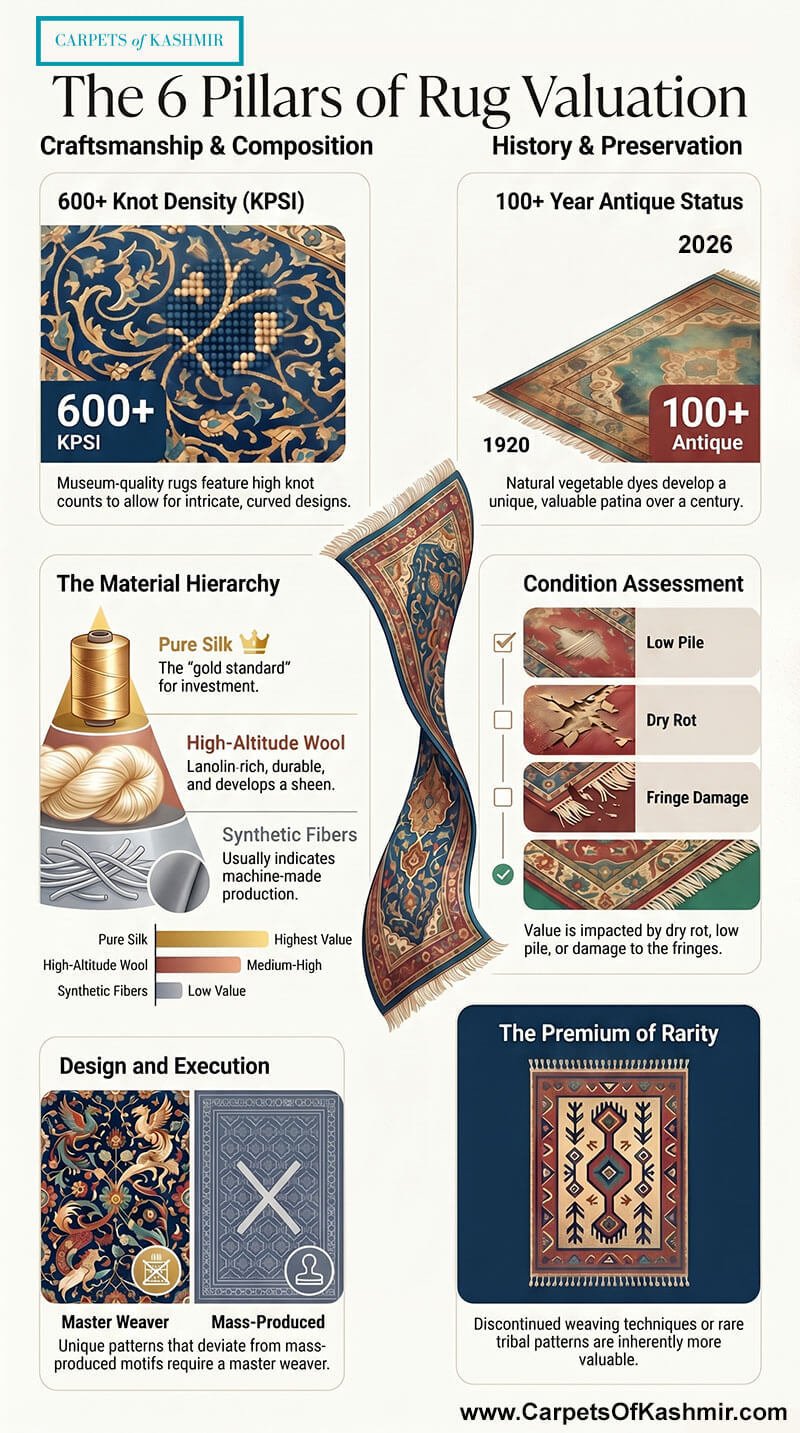
When assessing a rug, appraisers consider several key factors that significantly influence its value. Here are five crucial elements:
- Origin: The production region is essential. Rugs from renowned areas like Tabriz or Isfahan are often valued higher due to their rich history and craftsmanship.
- Age and Condition: Antiques (usually over 100 years old) are prized for their rarity. Additionally, overall condition affects value; well-maintained rugs command higher prices. For more insights on how age affects your rug’s value, visit https://buyprg.com/understanding-rug-age-value.
- Materials and Craftsmanship: The use of high-quality materials (like pure silk or hand-spun wool) and intricate craftsmanship (such as knot density) can dramatically increase a rug’s desirability.
- Design and Provenance: Unique designs and documented history can enhance value. Rugs with a clear lineage or notable craftsmanship are often more sought after in markets.
- Market Conditions: Current demand trends impact valuation. If a particular style is trending, prices may rise accordingly.
A comprehensive rug appraisal utilizes these factors to provide a well-rounded evaluation, ensuring that the owner understands the current market dynamics as well as the intrinsic value of their rug. For insights on factors that influence rug appraisal, visit Alyshaan, Nazmiyal, and City Rugs.
Types of Rug Appraisals: A Comprehensive Overview
Rugs fall into various categories, each with different appraisal needs. Here are several important types of rug appraisals:
Carpet Appraisal
A carpet appraisal is specific to wall-to-wall or large area carpets. These typically require heightened attention to size and installation because replicating such extensive pieces can be costly. Accurate assessments help in determining whether to emphasize replacement value or collector market value, especially for custom installations.
Persian Rug Appraisal
When appraising Persian rugs, the emphasis is on their historical significance and craftsmanship. Persian rugs from storied workshop cities (e.g., Tabriz, Kashan) often achieve higher market prices due to their hand-knotting and use of fine materials. Authenticity plays a crucial role; rugs must be substantiated as originating from Iran versus being imitations from other regions.
Oriental Rug Appraisal
Oriental rugs encompass a wider range of hand-knotted rugs from various regions (e.g., Middle East, Central Asia). Appraisals focus on identifying country of origin and evaluating the artistic merit alongside market value. Patterns and traditional motifs influence desirability and thus, pricing.
Antique Rug Appraisal
Specializing in rugs over 100 years old, an antique rug appraisal accounts for the rarity and historical context of pre-1900 pieces. Age, conditions of wear, and preservation are crucial in determining how much an antique rug is worth. For further information on appraising antique rugs, see https://buyprg.com/rug-appraisal-dayton-ohio-value.
Area Rug Appraisal
An area rug appraisal applies to moveable floor coverings used in defined spaces. It’s essential for homeowners who need accurate documentation for valuable area rugs, whether for insurance or resale purposes.
Turkish Rug Appraisal
Turkish rugs have their appraisal requirements, focusing on age, regional styles, materials, and craftsmanship. Experts must understand local traditions, which allows them to accurately differentiate authentic Turkish rugs from imitations.
For further reading, check out Alyshaan, Nazmiyal, and Weston Carpet.
The Appraisal Process: Step-by-Step
Understanding the rug appraisal process involves several practical steps to achieve the best results. Here’s how it typically unfolds:
Step 1: Research and Identify Experts
Start by looking for qualified appraisers with expertise in rugs. It’s vital to check for memberships in reputable organizations and their specialization in the type of rug you have (e.g., Persian, Oriental).
Step 2: Initial Contact and Information Sharing
Most appraisal services request remote screening. Be prepared to send high-resolution photos showcasing your rug’s front, back, and any intricate details. Provide its dimensions, estimated age, and purchase history.
Step 3: Onsite Evaluation
In-person assessment involves the appraiser examining the rug up close. They will inspect the weave, material quality, knot density, design, and overall condition using established grading scales.
Step 4: Market Comparison
After the inspection, the expert will compare your rug to similar ones that have been sold recently. They consider current trends and determine both the market value and replacement value if needed.
Step 5: Written Appraisal Report
You will receive a formal written report detailing the findings, including the rug’s type, origin, age, materials, and assessed market value. The appraiser’s credentials and methodology are also included for validation.
For a deeper understanding of the appraisal process, refer to Alyshaan and City Rugs.
Preparing for Your Rug Appraisal
Before the appraisal, take time to prepare necessary documentation, enhancing the accuracy and defensibility of your evaluation:
- Gather Documentation: Include purchase receipts, auction catalogues, prior appraisals, and authenticity certificates.
- Provenance: Document the rug’s history, previous owners, and any noteworthy background that could enhance its value.
- Maintenance Records: Keep a record of any cleaning or restoration efforts; this can positively influence the rug’s value.
- Measure and Photograph: Accurate dimensions alongside clear photos help the appraiser identify aspects remotely.
The more complete your information, the more precise your appraisal will be. Need more tips? Visit Alyshaan.
Choosing the Right Appraisal Service
Selecting the proper rug appraisal service is crucial to obtaining a reliable assessment:
- Certifications and Memberships: Research appraisers accredited by recognized organizations; this reveals a commitment to professionalism. For a comprehensive guide to rug appraisal services, see https://buyprg.com/rug-appraisal-dayton-ohio-services.
- Experience: Look for appraisers who specialize in the type of rug you own. Their expertise can directly impact valuation accuracy.
- Transparency: Ensure the appraiser discusses how they determine value and shares their evaluation criteria clearly.
- Reputation: Check reviews and customer feedback to gauge their effectiveness and reliability.
Investing time to choose the right appraiser is essential; this will ensure you achieve a thorough and effective evaluation of your valuable rug. For more specialized insight, check out Alyshaan and City Rugs.
How to Use Your Rug Appraisal
Once you obtain your rug appraisal, here’s how to leverage it effectively:
- Insurance: Present the appraisal to your insurance company to establish coverage limits. It proves invaluable in case of loss or damage, enabling smoother claims processing. For additional guidance on protecting your investment, visit https://buyprg.com/rug-appraisal-dayton-ohio.
- Value for Sale or Consignment: Use the appraisal when setting sale prices or negotiating with potential buyers. A documented value reassures buyers and adds credibility to your sale.
- Estate Planning: Documentation becomes vital in preparing estate inventories; your rugs can be treated as financial assets, ensuring fair distribution.
Updating your appraisal periodically can also keep your records in line with market shifts. Ensure that your investment is well-documented and that your insurance reflects current values.
For detailed points on using your appraisal effectively, visit Alyshaan and City Rugs.
Conclusion
In conclusion, a thorough rug appraisal is essential not only for understanding the value of your rug but also for protecting your investment through accurate insurance, informed resale decisions, and proper estate planning. The appraiser’s expertise ensures that important factors such as origin, age, craftsmanship, and market conditions are taken into account.
When it comes to valuable rugs, from Persian to Oriental to Turkish pieces, a professional appraisal offers a reliable method for safeguarding their value.
If you own a valuable rug that needs appraisal, don’t hesitate to seek out professional help. The accuracy of a documented valuation can provide significant peace of mind regarding your investment.
Call-to-Action
Are you in need of a professional rug appraisal? Connect with a certified appraiser who specializes in:
- Persian rug appraisal
- Oriental rug appraisal
- Turkish rug appraisal
- Antique rug appraisal
- Area rug appraisal
Request a written quote for your rug’s appraisal tailored to its specific type and intended use. Contact a specialized appraisal service today to ensure that your rug’s true value is understood and protected.
For more resources, check out Alyshaan, City Rugs, and Weston Carpet.
Taking this step will safeguard your rug’s value and prepare you for any insurance or financial decisions that may arise.