
Persian Rug Buying Guide: How to Evaluate, Price, and Choose the Right Rug
Estimated reading time: 8 minutes
Key Takeaways
- Understanding Persian Rugs is crucial for making an informed purchase.
- The **back of a rug** can reveal its authenticity and craftsmanship.
- **Determining rug age** significantly impacts its market value.
- Proper maintenance and storage enhance the longevity of your rug.
- Always verify authenticity via reputable sources before purchasing.
Table of contents
Welcome to our comprehensive Persian rug buying guide! If you’re on the hunt for the perfect Persian rug, you’re in the right place. This guide will help you evaluate, price, and select a rug that fits your style and investment goals. Understanding features like the back of a rug is crucial to assessing its authenticity and quality. Let’s dive in!
Understanding Persian Rugs
Persian rugs, intricately woven textiles originating from Iran, are renowned for their cultural significance and exquisite craftsmanship. These rugs are not just decorative items; they symbolize a rich history and embody the artistry of skilled weavers. For more insights on their heritage and cultural impact, check out our article on The History and Significance of Persian Rug Patterns.
Key Characteristics of Persian Rugs
- Handmade Construction: Most Persian rugs are hand-knotted, showcasing the unique skill of artisans. Each knot is tied around warp threads, emphasizing the rug’s craftsmanship. [source]
- Regional Identity: Different cities and villages in Iran have their distinct styles, colors, and patterns. This regional variation adds to the rug’s story and value.
- Design Techniques: Persian rugs often feature intricate, curvilinear designs, floral motifs, or geometric patterns. This diversity in design highlights the cultural influences on each region.
- Natural Materials: These rugs are typically made from wool, silk, or cotton. The quality of the materials significantly impacts durability and price. [source]
- Individual Variation: Unlike machine-made rugs, handmade Persian rugs may exhibit slight irregularities in size or design—this is a hallmark of authenticity.
A crucial aspect of evaluating a Persian rug is examining the back of a Persian rug. Often, the back can reveal whether the rug is handmade and uphold its claim to authenticity.
Evaluating the Back of a Persian Rug
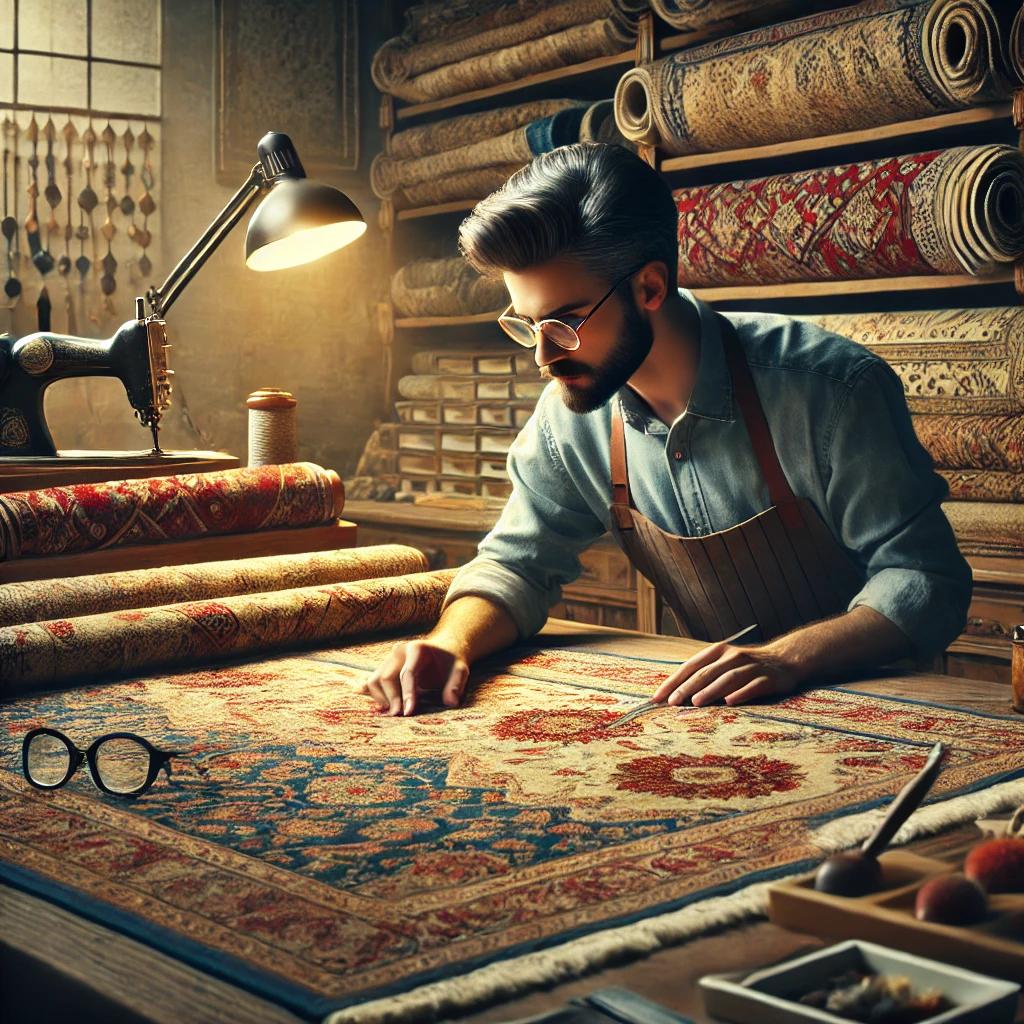
Inspecting the back of a Persian rug is a pivotal step in assessing its quality and craftsmanship. For more tips on identifying authentic Persian rugs, refer to How to Identify an Authentic Persian Rug: A Buyer’s Guide. A hand-knotted rug will typically reveal its construction secrets when turned over.
What to Examine
1. Visibility of Individual Knots
Look closely to see if individual knots are visible through the back of the rug. A genuine hand-knotted rug will maintain the design’s integrity, with recognizable patterns appearing, albeit less vibrant than on the front. A machine-made rug, on the other hand, often shows uniformity that lacks the character of handwork. [source]
2. Knot Density
Knot density is a key quality indicator. Expressed as knots per square inch (KPSI), finer rugs will generally have a higher KPSI. Persuasive craftsmanship often has KPSI values of 200-800 or more, but many valuable rugs with lower KPSI can still be highly regarded due to their rarity and design. [source] Also, consider checking out expert advice on spotting quality in handmade rugs here: Spotting Quality: Tips for Evaluating Handmade Rugs.
3. The Foundation
Inspect the warp and weft threads. Understanding the foundation of the rug can provide insights into its construction and origin:
- Cotton Foundation: Most common in city rugs.
- Wool Foundation: Typically found in tribal or village rugs.
- Silk Foundation: Common in fine, rare pieces.
Identifying the foundation helps place the rug in its historical and regional context. [source]
4. Fringe and Selvages
Check the fringe at the ends of the rug for continuity with the warp threads. Authentic fringing should appear as a natural extension of the rug. Inspect the selvages for original wrapping, consistent finishing, or any signs of repairs. [source]
5. Backing, Latex, and Adhesive
Beware of thick backings, adhesives, or latex coatings, which indicate machine-made rugs. Traditional Persian rugs should be without artificial coatings. If there’s backing, ensure that it serves a legitimate purpose, like conservation, rather than indicating a lack of craftsmanship.
Visual Markers of Genuine Craftsmanship
When examining a Persian rug, look for the following indicators:
- A pattern visible from the reverse
- Individual knots, rather than uniform rows
- Subtle variations that indicate handwork
- A supple feel rather than a stiff, board-like texture
- Natural tonal variation in dyes, which can highlight age and authenticity
If you’re considering a significant purchase, seeking a professional inspection from an expert is always advisable.
Determining Rug Age and Its Impact on Value
Understanding rug age is essential to assessing desirability and pricing. The age of a rug can dramatically influence its market value. Read more about how age influences value in our detailed guide: Understanding Rug Age Value.
Categories of Rug Age
- Antique: Typically over 80-100 years old, depending on the market.
- Semi-Antique: Rugs made from 1900-1940.
- Vintage: Generally from the mid-20th century.
- Modern: Recently produced rugs.
Always ask for specific estimated dates rather than solely relying on labels. [source]
Why Age Matters
Older rugs are prized for their historical significance, unique designs, and the rarity that age confers. Their naturally aged dyes and hand-spun fibers can be indicative of quality. While age alone does not ensure high value, the interaction of age, origin, condition, and craftsmanship ultimately determines market price. [source]
Distinguishing Antique from Modern Reproductions
To discern the authenticity of an antique rug, look for:
- Natural Dye Variation: Real aged dye will typically show soft shifts in tone.
- Honest Wear: Genuine aged rugs will exhibit wear over time, while reproductions may have artificial wear.
- Foundation Aging: Look for wear and changes in the warp or weft that can indicate age.
- Design History: Ensure that the design aligns with known historical patterns and attributes.
Ask for a professional appraisal if you’re considering a high-value purchase. [source]
Top Persian Rugs on the Market
When exploring the top Persian rugs, it is essential to recognize not just the styles but also their market value and desirability. Here’s a brief overview of some prominent Persian rug styles:
| Style or Region | Typical Characteristics | Why Buyers Value Them |
|---|---|---|
| Tabriz | Elaborate floral or pictorial designs | Renowned for refined craftsmanship and detail |
| Kashan | Rich reds and blues, central medallions | Appreciated for formal layouts and dense weaving |
| Heriz | Large geometric medallions | Valued for durability and architectural designs |
| Sarouk | Curving floral patterns with rich palettes | Popular for detailed designs and collectability |
| Kerman | Floral compositions and delicate borders | Known for elegant, finely drawn patterns |
| Isfahan | Balanced floral layouts | Sought after for their precision and refined city style |
| Nain | Fine curvilinear designs | Popular in contemporary interiors for their elegance |
| Gabbeh | Bold colors and simple geometric forms | Valued for character, durability, and expressiveness |
High-quality pieces often command premium prices when regional attribution, age, condition, and materials align perfectly.
Pricing and Purchasing Considerations
Understanding pricing considerations is crucial when investing in a Persian rug. Prices can vary dramatically based on multiple factors.
Main Factors Affecting Price
- Authenticity and Construction: Verify if the rug is indeed hand-knotted.
- Origin: A rug’s regional heritage can influence its value.
- Age: Confirm age authenticity through signs of wear and guild practices.
- Condition: Inspect thoroughly for damages, repairs, or fading.
- Design and Rarity: Unique designs can significantly increase price.
- Size and Usability: Larger rugs are often rarer and more valuable.
- Materials and Dye Quality: Quality fibers increase desirability.
- Provenance and Documentation: The rug’s history can authenticate its value.
How to Compare Prices
When comparing rugs, you should ask for a detailed description including:
- Approximate age and claimed origin
- Construction method
- Fiber content and dimensions
- Condition and any repairs
- Return policy
This information helps ensure you compare similar rugs, making it easier to gauge value accurately.
Using a Discount Rug Outlet
A discount rug outlet can offer competitive prices by selling overstock or discontinued inventory. However, be cautious. Ensure the outlet can:
- Provide detailed rug construction information
- Disclose any repairs or significant wear
- Answer questions regarding the rug openly
Additionally, learn why handmade rugs tend to be a better investment than machine-made options: Why Handmade Rugs Are a Better Investment Than Machine-Made Rugs.
Beware of urgency in purchasing decisions or claims of inflated “original prices.”
Proper Storage and Maintenance
Proper care ensures the longevity of your rug. Wool Persian rugs are durable, but specific environmental factors can reduce their lifespan.
Storing Wool Rugs
- Always clean the rug before storage.
- Ensure it is completely dry.
- Roll the rug with the pile facing inward.
- Use breathable cloth for wrapping—avoid plastic covers.
- Store it in a cool, dry, stable environment, away from direct sunlight.
For further tips on preserving your rug, see Storing Wool Rugs: Best Practices to Extend Rug Life.
Routine Maintenance
- Vacuum regularly with gentle suction.
- Rotate the rug periodically to prevent uneven wear.
- Blot spills immediately with a clean, absorbent cloth.
- Avoid using harsh cleaning agents; consult professionals for deep cleaning.
Regular inspection for pests and moisture is also vital to maintain your rug’s quality. [source]
Final Persian Rug Buying Checklist
As you finalize your purchase, refer to this checklist:
- Back of the Persian Rug: Are individual knots and the design visible?
- Back of a Rug: Is there any suspicious latex or adhesive present?
- Construction: Is the rug hand-knotted?
- Fringe and Edges: Are fringes consistent with the weaving technique?
- Rug Age: Is the claimed age supported by visible signs of wear?
- Condition: Are there any damages or concerns?
- Regional Style: Does the rug’s design align with claimed origins?
- Quality: How does it compare against similar rugs?
- Price: Is the price justifiable based on authenticity and condition?
- Seller: Does the dealer provide transparent descriptions and return options?
- Storage Plan: Do you have a plan for preserving your rug?
In summary, taking the time to check all these factors will guide you toward making an informed purchase. The Persian rug buying guide is an essential resource to ensure you choose a rug that is both beautiful and valuable for years to come.
By utilizing this guide, you can confidently navigate the intricate world of Persian rugs, ensuring a rewarding and pleasant buying experience.