
The History of Persian Rugs: A Rich Tapestry of Culture and Craftsmanship
Estimated reading time: 7 minutes
Key Takeaways
- Persian rugs reflect centuries of cultural identity and artistic craftsmanship.
- Woven by nomadic tribes, these rugs evolved from practical items to symbols of prestige and wealth.
- Key historical periods include the Achaemenid, Sasanian, and Islamic Golden Age.
- Designs and materials vary widely, showcasing the intricacies of Iranian culture.
- Today, Persian rugs are celebrated not only for their beauty but also for their cultural significance.
Table of contents
- Introduction: Persian Rugs History and Cultural Significance
- Historical Overview: Origins and Evolution
- Cultural Context and Significance
- Weaving Techniques and Tools: The Persian Loom
- Materials and Craftsmanship: The Importance of Wool in Persian Rugs
- Conclusion: The Enduring Legacy of Persian Rugs
- Frequently Asked Questions
Introduction: Persian Rugs History and Cultural Significance
The history of Persian rugs reaches back at least 2,500 years, making it one of the oldest continuously practiced art forms in the world. Persian rugs serve as a window into Iran’s cultural identity, social life, and artistic achievement. These magnificent textiles not only provide warmth and comfort but also encapsulate centuries of rich heritage and skill.
Early carpets were woven by nomadic tribes in ancient Persia primarily for essential, practical purposes. They ensured warmth and insulation, integral for survival in their tent dwellings. Over time, however, these functional pieces transformed into symbols of prestige. They became associated with status and wealth, often made from fine wool, silk, and even embellished with gold and silver threads. They also found their places in the courts of royalty and were gifted as tokens of diplomacy between powerful rulers.
Referring to Persian carpets history emphasizes the artistic and technical development of these carpets themselves, while Iranian carpet history highlights how these textiles mirror broader historical, political, and social changes in Iran. Both perspectives together provide the framework for understanding how Persian rugs came to embody the cultural soul of Iran.
Historical Overview: Origins and Evolution
Early Origins
The origins of Persian rugs can be traced back to at least the 5th century BCE or possibly earlier, with archaeological evidence suggesting a long-standing tradition of rug weaving in the Iranian region. Greek writer Xenophon notably mentioned Persian carpets in a context of luxury and opulence around 400 BCE, indicating their early association with high status and refinement.
Key foundations of early Persian rug-making included:
- Use of twisted wool fibers for durability, essential in nomadic settings.
- Development of horizontal looms, allowing for more complex and patterned weaving.
- Emergence of distinct regional practices among tribes and villages, each developing unique designs and techniques.
The Achaemenid Empire (6th–4th century BCE) is recognized for advancing carpet craftsmanship, highlighting intricate patterns that laid the groundwork for later Persian rug traditions. During the Sasanian period (3rd–7th century CE), textile arts flourished, propelled by significant court patronage, giving rise to decorative carpets that became central to royal ceremonies.
The Islamic Golden Age (8th–14th century) marked an important period of innovation and cultural exchange. Artisans experimented with:
- New materials, incorporating more silk and improved cotton.
- Advanced dyeing techniques, expanding the color palette available to weavers.
- Increasingly sophisticated designs, thereby integrating geometric and floral motifs influenced by broader Islamic art.
By tracing the Persian carpets history, we gain insight into the complex interplay between craftsmanship and the social fabric of Iranian life.
Achaemenid, Sasanian, and Islamic Golden Age
During the Achaemenid Empire, paintings and inscriptions illustrated carpets being used as symbols of power and luxury. This foundational period set the stage for later innovations.
The Sasanian era witnessed a boom in textile arts, including advancements in flat-weaving and embroidery. Royal courts commissioned extravagant carpets, employing intricate designs that further refined Persian rug artistry.
The Islamic Golden Age fostered a rich dialogue between cultures and ideas. Artisans shared techniques and innovations, transforming Persian rugs into objects celebrated for their artistic beauty. The exchange led to:
- Expanding color palettes, thanks to new dyeing methods.
- The introduction of textiles made from diverse materials such as silk and fine wool.
- A trend toward exceptionally intricate designs that incorporated both geometric and floral patterns as seen in broader Islamic art.
Persian Carpets History vs Iranian Carpet History
Understanding Persian carpets history versus Iranian carpet history provides valuable insights:
- Persian carpets history centers on the evolution of design, material selection, knotting techniques, and workshop traditions. It often emphasizes renowned centers such as Kerman and Kashan, each famous for specific styles.
- Iranian carpet history places these developments within the broader context of Iran’s political and social landscape, such as imperial patronage, invasions, and cultural shifts.
Together, these distinctions reveal how weaving practices intersected with regional identities across Iran, creating a rich tapestry that continues to capture the spirit of its people.
Cultural Context and Significance
Role in Iranian Daily Life and Customs
Persian rugs play an integral role in Iranian culture and customs:
- Domestic Spaces: Carpets are central to the layout of homes, serving not only as decorations but as living spaces where families gather.
- Religious Practices: Persian rugs, particularly prayer rugs, fill a critical function in Islamic rituals. They provide a designated space for prayer, often designed with specific motifs that symbolize spiritual entryways.
- Life-Cycle Events: Persian rugs are traditional gifts during significant life events such as weddings, symbolizing stability and continuity within a family unit.
Moreover, many families actively engage in weaving communities, where carpets become more than mere objects; they represent cultural heritage and family stories.
For more detailed insights, refer to Georgetown University.
Symbolism and Design Traditions
Persian rug designs are steeped in symbolism, reflecting the underlying themes of Iranian culture:
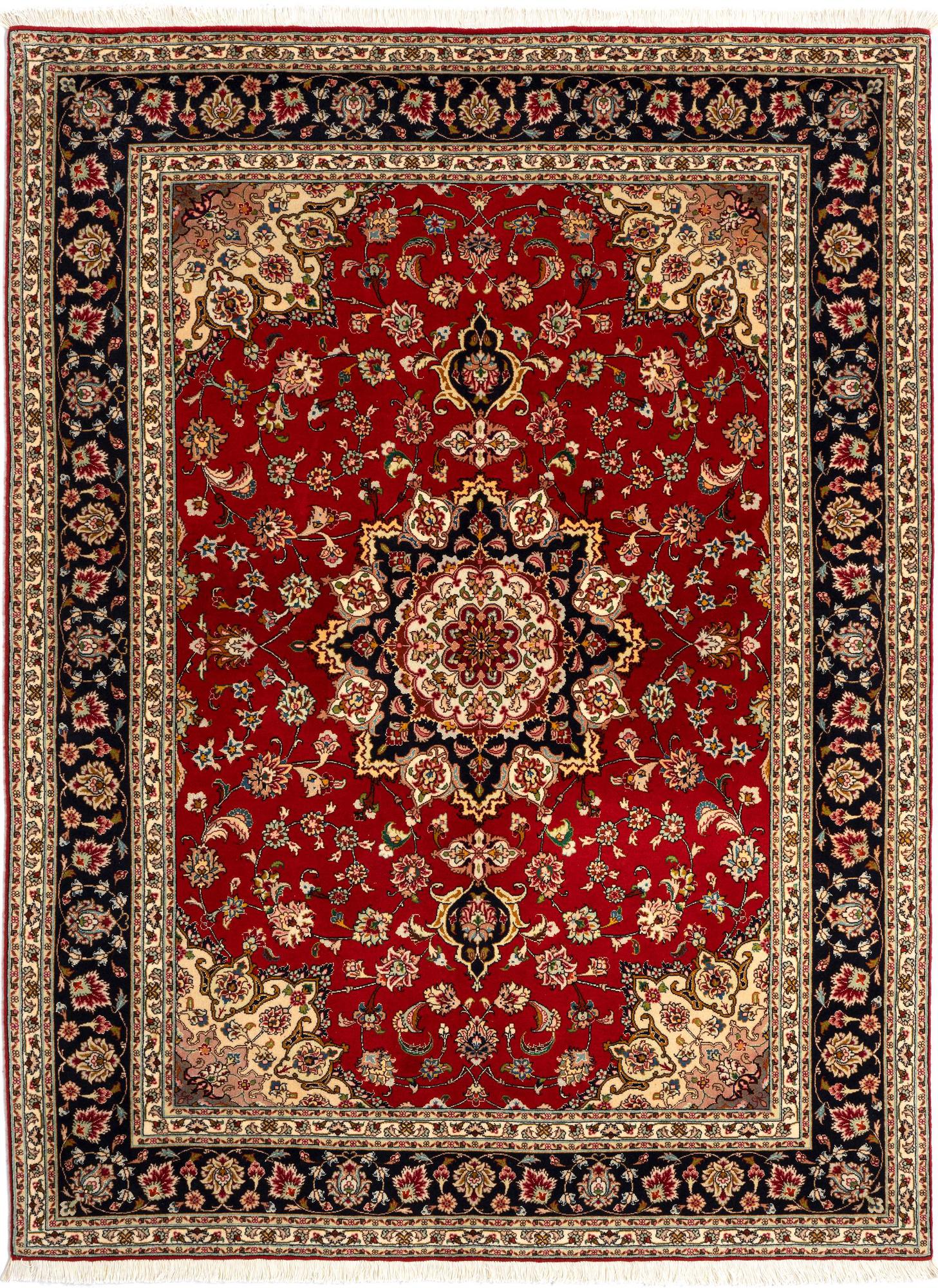
- Paisley motifs symbolize fertility and growth, a recurring theme in agricultural societies.
- Prayer rugs often display architectural features and florals, suggesting sacred sites and spiritual intersections.
- Designs also replicate the concept of paradise, reflecting historical Persian poetic and religious imagery.
Many Persian rugs utilize patterns that convey protection and abundance, seen through motifs like fish and floral arrangements. Over centuries, these symbolic representations have been preserved, interpreted, and adapted, leading to a continuously evolving visual narrative tied to Iranian beliefs. For further insight on the deeper meaning behind the colors in Persian rugs, see The Emotional Impact of Colors in Persian Rugs.
Social and Diplomatic Significance
Historically, Persian carpets have served as essential symbols of prestige both within Iran and internationally:
- They represent wealth and power in royal courts and elite households, signifying high status.
- Used as diplomatic gifts, Persian rugs conveyed goodwill and served to reinforce alliances between nations.
- They became powerful representations of Iranian culture abroad, frequently depicted in European art as symbols of taste and sophistication.
Persian rugs, thus, embody not just craftsmanship but also narratives of diplomacy and cultural identity on a global stage.
Weaving Techniques and Tools: The Persian Loom
The Persian Loom
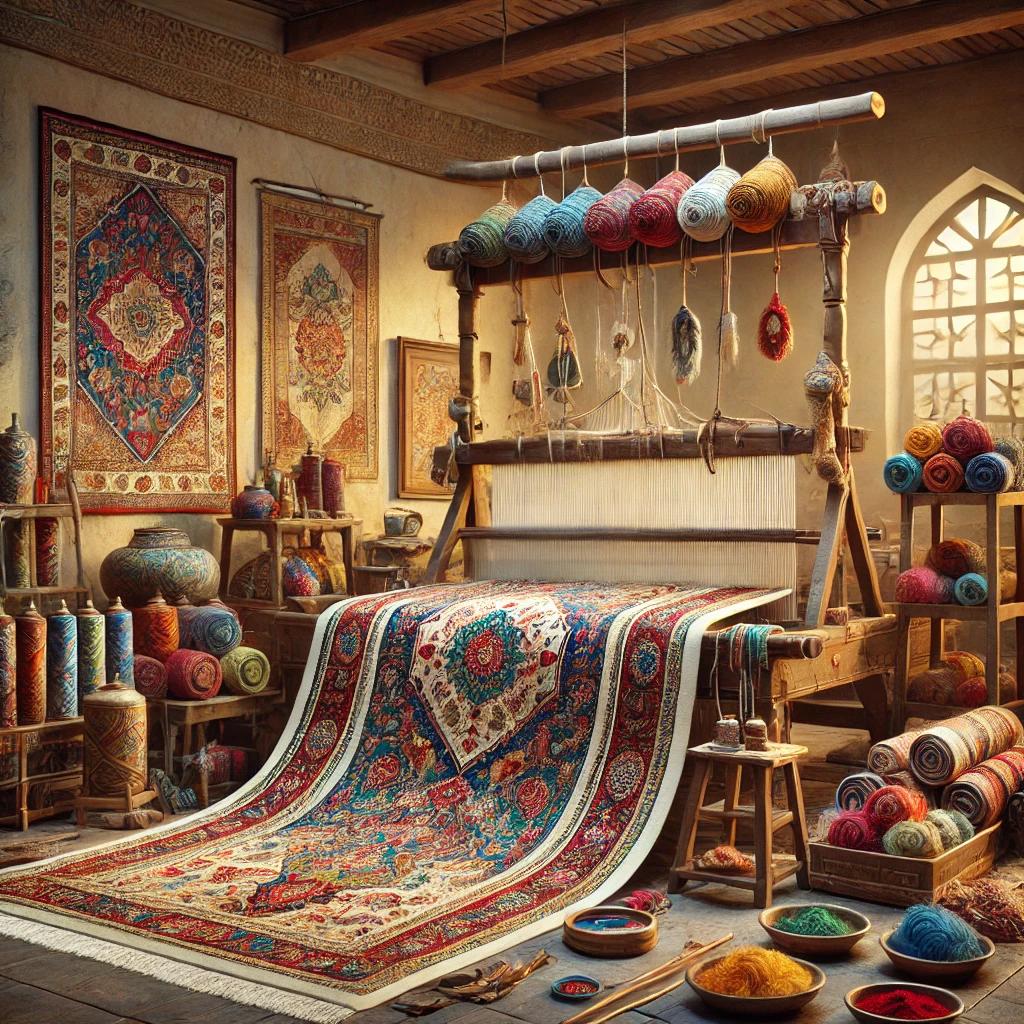
At the heart of producing Persian rugs lies the loom, a critical tool that maintains tension for the intricate weaving process. This traditional loom allows for the precise artistry and structure that characterize Persian carpets.
- The horizontal and vertical looms used by weavers dictate the styles and complexity of patterns, where different types provide unique benefits regarding mobility and craftsmanship.
- By maintaining the tension of the warp threads, weavers can accurately construct intricate designs, producing different textures and densities based on the chosen knotting styles.
High knot density indicates a more detailed design, while lower density results in bolder patterns commonly found in village and tribal weavings.
For a deeper understanding, learn more in The Art of Persian Rug Weaving: A Tradition Worth Preserving.
Weaving Practices and Craftsmanship
Persian rug weaving is a meticulous, multi-stage collaborative process:
- Designers create patterns and color schemes.
- Spinners process raw wool or silk into yarn.
- Dyers prepare the color gradients.
- Weavers execute designs on the loom based on the plans laid out.
The time required to craft a single carpet can extend from a few months to several years based on size and complexity. Coordinated efforts by skilled artisans lead to timeless pieces that celebrate the richness of Persian traditions.
Historically, rug weaving traditions diverged based on geographic and social factors:
- Nomadic weavers focused on spontaneous, expressive designs.
- Urban workshops utilized established patterns and meticulous planning, resulting in symmetric and refined compositions.
As weaving technologies evolved, alongside shifts in social frameworks, the landscape of Persian carpet making transformed, impacting both designs and distribution.
Materials and Craftsmanship: The Importance of Wool in Persian Rugs
Wool: Core Material of Persian Carpets
Wool forms the backbone of Persian rugs, offering several critical benefits:
- Durability ensures carpets withstand daily wear.
- Excellent dye absorption allows for vibrant and lasting colors.
- Natural elasticity lends resilience, enabling the crafted rugs to retain shape over time.
The quality of wool varies based on the sheep breed and the regional climate, with highland and specific local wool varieties being coveted for their fine texture and strength.
For further details, refer to McGill.
Processing and Use of Wool
Before weaving, wool undergoes an essential processing cycle:
- Washing removes impurities.
- Grading sorts fibers by length and quality.
- Carding aligns fibers for easier spinning.
- Spinning creates yarn suitable for various carpet elements.
- Dyeing typically employs natural dyes from plants and minerals, giving Persian rugs their deep hues.
The artistry of wool processing culminates in the final product, where unique color variations known as abrash further enhance each carpet’s character.
Wool, Structure, and Aesthetic
In Persian carpets, wool usually comprises the pile, with cotton often forming the warp and weft. This arrangement provides:
- Structural integrity, ensuring carpets lie flat.
- Aesthetic depth and appeal, as wool’s inherent qualities allow for vibrant, textured designs.
High-quality wool paired with artisanal techniques teaches us of the enduring quality and beauty of Persian carpets. Each piece tells not just a story of textile tradition but also embodies craftsmanship that has survived throughout the ages.
Conclusion: The Enduring Legacy of Persian Rugs
The history of Persian rugs represents a rich tapestry of cultural identity, craftsmanship, and artistic expression. From their origins as practical floor coverings to contemporary global symbols of art and sophistication, Persian rugs have withstood the test of time.
- The historical progression reveals the evolution of Persian rugs from nomadic weavings to celebrated court masterpieces.
- The cultural context illustrates their significance in domestic life and religious practice, highlighting their role in Iranian heritage.
- The traditional craftsmanship surrounding the Persian loom, advanced knotting techniques, and the careful treatment of wool enhances their enduring allure.
For today’s readers, appreciating Persian rugs involves engaging with this complex heritage. To truly understand their beauty and significance, one can explore museum collections or specialized exhibitions, where carpets tell powerful stories of art, culture, and history. As we admire these textiles, we not only see the patterns and colors but also embrace the values and traditions they represent. Additionally, the legacy of luxurious alternatives, such as silk variants, is celebrated in The Art and Heritage of Silk Persian Rugs: Luxurious Craftsmanship and Timeless Elegance.
Frequently Asked Questions
What makes a Persian rug authentic?
Authentic Persian rugs are handwoven, showcase unique patterns, and often contain natural dyes. They come from established weaving regions in Iran.
How can I care for my Persian rug?
Regular vacuuming, immediate stain treatment, and professional cleaning every few years will help maintain its beauty and longevity.
Why are Persian rugs so expensive?
The price reflects the quality of materials, the intricacy of designs, and the amount of labor involved in handweaving each piece.
Where can I buy authentic Persian rugs?
Authentic Persian rugs can be found at specialized rug dealers, art galleries, and museums that sell pieces from trusted sources.