
The History and Cultural Significance of Persian Rugs
Estimated reading time: 8 minutes
Key Takeaways
- Persian rugs represent a rich **historical and cultural legacy** in Iran.
- They evolved from practical items to valuable **symbols of status**.
- The **Safavid dynasty** marked a golden age for Persian rug artistry.
- **Weaving techniques** and materials play a crucial role in defining Persian rugs.
- Persian carpets continue to reflect the **cultural identity** of their makers.
Table of contents
- Introduction: Persian Rugs in History and Culture
- Historical Overview: Origins and Evolution
- Weaving Techniques and Materials
- Cultural and Artistic Significance
- Conclusion: Key Milestones and Cultural Contributions
- Additional Resources and Suggested Reading
Introduction: Persian Rugs in History and Culture
Hand-woven Persian rugs originate from modern-day Iran and carry immense historical significance within the technological, artistic, and cultural fabric of Iranian life. These exquisite textiles have transformed over time from practical items used to insulate homes and tents into symbols of wealth, diplomacy, and spiritual devotion. Historically, Persian rugs blend practical utility with high artistic expression, marking their status as both common household items and esteemed artworks. For an even deeper exploration of Persian rug heritage, readers may also enjoy exploring this link.
As centuries progressed, Persian rugs have served as:
- Diplomatic gifts between rulers and empires.
- Religious donations to mosques and shrines.
- Key decorative elements in palaces and residences—both in Iran and globally.
Understanding the Persian rugs history helps elucidate their intricate connection to broader Iranian cultural narratives (Sharafi and Co., AL Rug).
Historical Overview: Origins and Evolution
Early Origins of Persian Carpets History
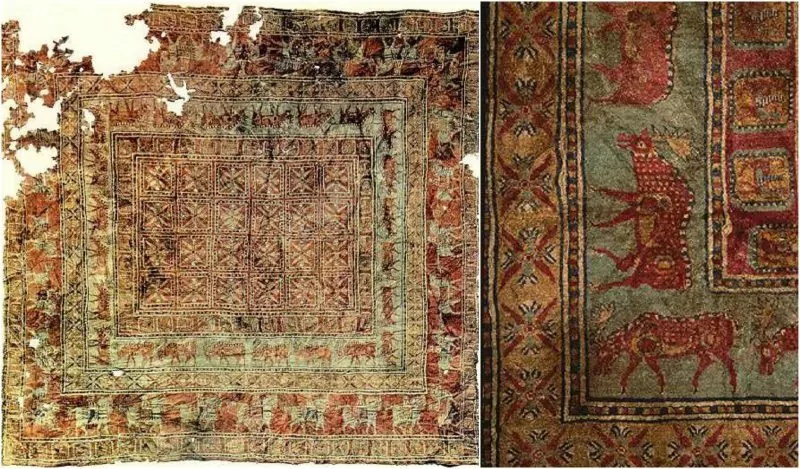
Evidence of carpet weaving within the Iranian cultural sphere dates back to the 5th century BCE, primarily associated with nomadic tribes. These groups utilized the hair from sheep and goats to fabricate flooring that provided insulation against cold climates (Sharafi and Co., AL Rug). The Pazyryk carpet, discovered in a Scythian burial mound in Siberia and dated to around 500 BCE, is the oldest known surviving pile carpet. Its intricate weaving and exemplary knotting techniques underscore the advanced skills of craftsmen during this era.
Greek historians like Xenophon and Herodotus mention luxurious Persian carpets in the context of royal courts, noting their association with wealth and status around 400 BCE (AL Rug, Nazmiyal Antique Rugs).
Achaemenid Empire’s Influence on Weaving Traditions
During the Achaemenid Empire (c. 550–330 BCE), Persia expanded its dominion across diverse territories, leading to the integration and exchange of various weaving styles and materials. This imperial influence fostered a vibrant tapestry of textiles, elevating carpets into imperial and ceremonial objects that signified power and artistry (BBC Culture, AL Rug).
The Safavid Golden Age of Carpet Production
The era between the 16th and 18th centuries, particularly under the Safavid dynasty, marked a pivotal transformation in Persian rug production.
- Royal workshops were established in key cities like Isfahan, Kashan, and Tabriz.
- Under the patronage of Shah Abbas I (r. 1588–1629), Persian carpets evolved into refined works of art, showcasing intricate floral and arabesque designs along with complex medallion layouts.
Carpets from this time often employed luxurious materials such as silk, gold, and silver threads, indicating a significant shift in textile artistry—a period many refer to as the golden age of Persian rugs (BBC Culture, AL Rug).
Decline and Revival of Persian Carpets After the Safavid Era
Following the Safavid decline in the 18th century, political instability led to a reduction in carpet production. Despite this, village and tribal weaving thrived, preserving many traditional designs and weaving techniques. The Qajar period (1789–1925) saw a fusion of classic Persian motifs influenced by Western tastes, reigniting interest in carpet crafting for both domestic use and export.
In the late 19th to 20th centuries, with growing Western demand for Persian textiles, a commercial emphasis redefined the craft, moving Persian carpets from cultural artifacts associated with royalty to market-oriented products tailored for international consumption (AL Rug).
Weaving Techniques and Materials
The Significance of the Persian Loom
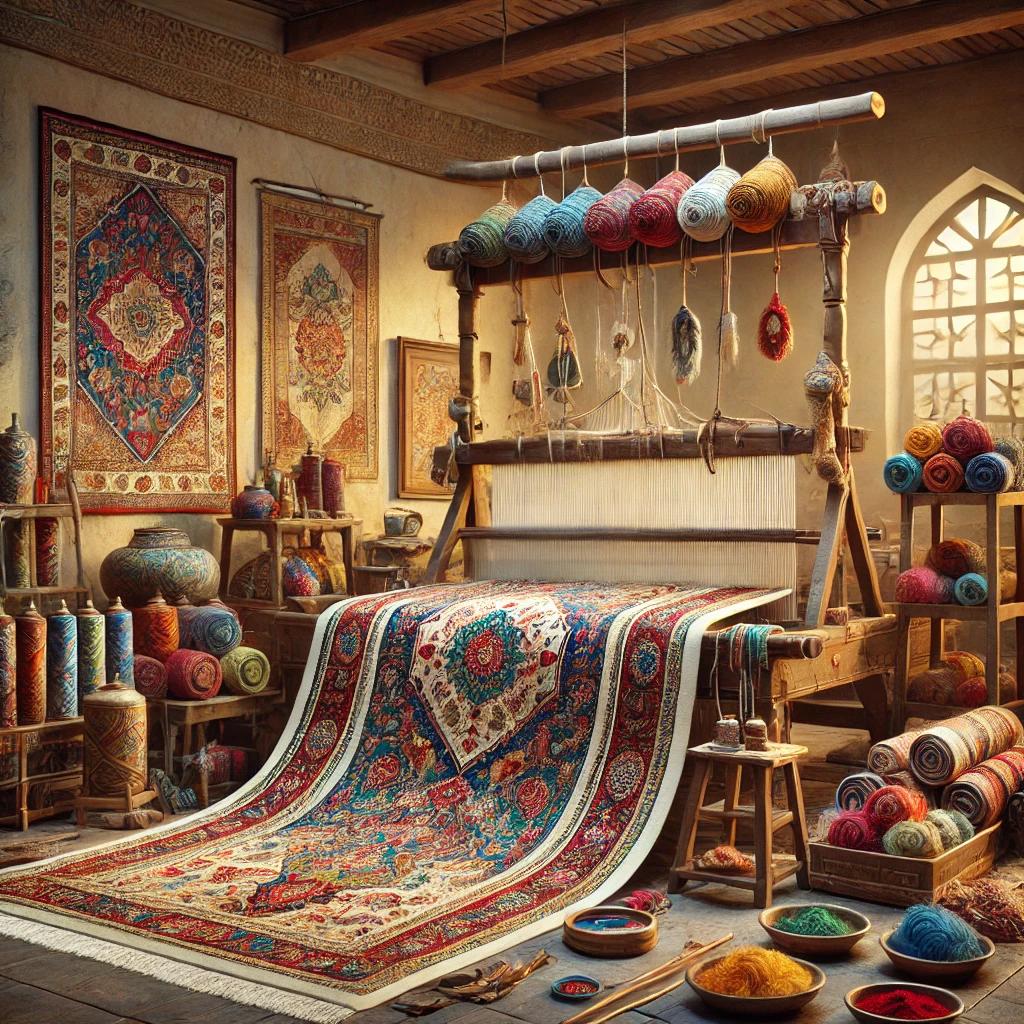
The Persian loom is central to the crafting of these remarkable textiles. Two primary types of looms have been historically employed in the weaving of Persian rugs:
- Horizontal looms: Used primarily by nomadic tribes, allowing easy relocation and adaptability for mobile lifestyles (Sharafi and Co.).
- Vertical looms: Found mainly in urban workshops, enabling the production of larger, more intricate carpets.
This duality illustrates the versatility and adaptability of weaving methods used to create distinctive Persian carpets, where intricate artistic designs meet practical crafting needs. For further insight into traditional methods and the cultural importance of the craft, readers may also explore this link.
Knotting Techniques: Craftsmanship and Standards
The Persian carpet weaving process employs two significant knot types:
- Symmetrical (Turkish/Ghiordes) knot: Used less frequently, where the yarn wraps around two warp threads, generally found in carpets originating from certain regions.
- Asymmetrical (Persian/Senneh) knot: More prevalent, where yarn encircles a single warp thread on both sides, allowing a finer finish and more intricate designs. For insights into the art and process of hand-knotting, readers can check out this link.
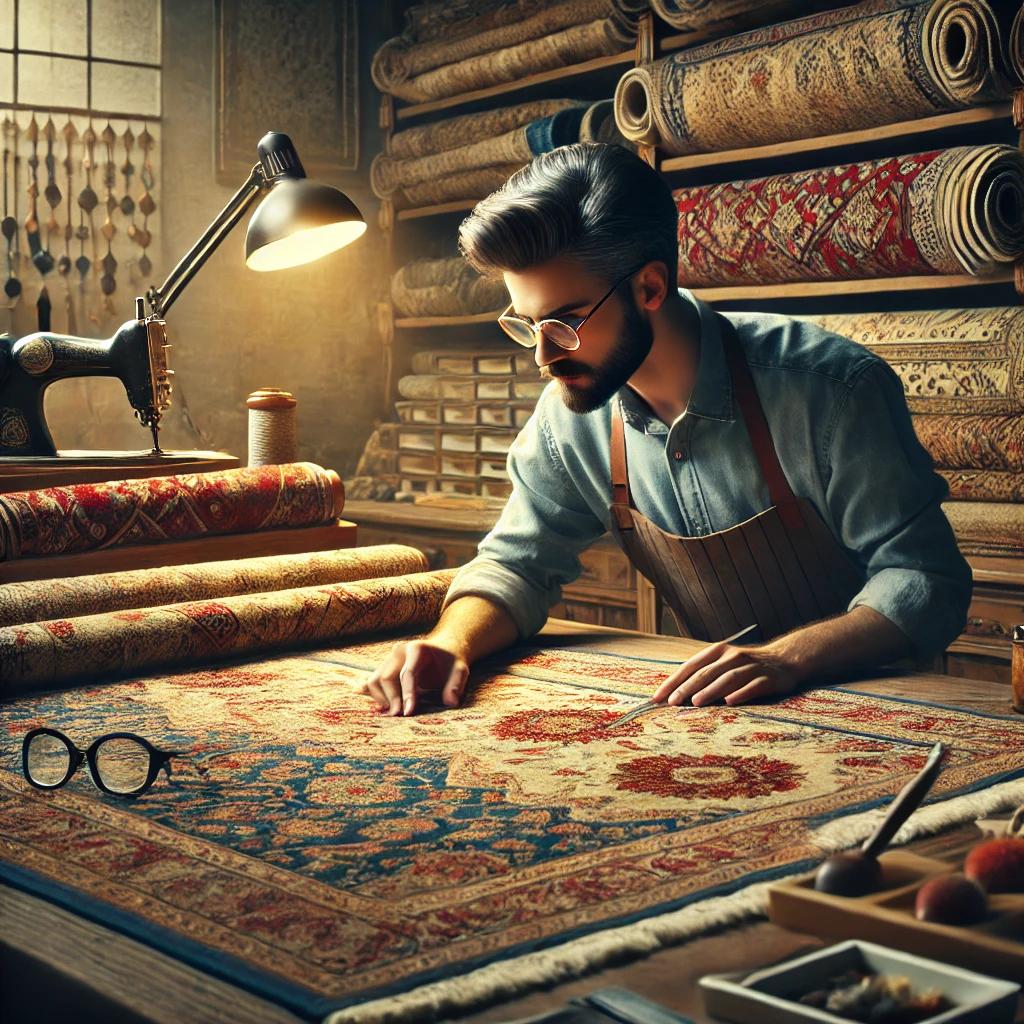
Quality and density of knots are vital indicators of the craftsmanship behind these textiles, as tighter knots yield more detailed patterns and greater durability (Sharafi and Co., AL Rug).
The Weaving Process: Tools and Practices
Weaving Persian carpets involves several key steps:
- Weavers utilize a cartoon—a guide for the pattern—in urban workshops, while tribal weavers may rely on memory.
- Each line of knots is pressed down with a special tool to compact the texture, followed by additional wefts that securely lock the knot rows in place.
- The finished rug is sheared after weaving to create an even pile and sharpen details of the design (AL Rug).
Cultural and Artistic Significance
Symbolism, Patterns, and Regional Styles
Persian rugs encapsulate a diverse aesthetic language rich in symbolism and artistic expression. Common motifs within these carpets include:
- Medallion designs: These often feature a central rosette or star-like shape, symbolizing celestial forms or noble architecture.
- Garden carpets: These intricate layouts depict paradisiacal themes, echoing Iran’s cultural notions of paradise (pairidaeza).
- Floral and arabesque patterns: Elaborate depictions of nature, heavily inspired by architectural decorations and manuscript art during the Safavid era.
- Geometric tribal designs: Characterized by bold, angular forms and stylized representations of animals, iconic among nomadic weaving communities like the Qashqai and Bakhtiari.
Regional diversity greatly influences these designs. For instance, Isfahan and Kashan are renowned for delicate floral compositions, while Tabriz is noted for intricate pictorial themes. For a broader perspective on how these distinct patterns evolved over time, readers may also find additional value in this link.
Cultural Narrative: Persian Rugs in Society
Throughout history, Persian rugs history, Persian carpets history, and Iranian carpet history converge around themes of identity, power, and cultural continuity. Carpets have been a source of local and regional identity, preserving cultural memory across generations.
In the past, carpets exemplified courtly power under the Safavid dynasty, functioning as material representations of imperial prestige. Today, even as Persian rugs have transitioned into both status symbols internationally and functional objects in Iranian homes, their cultural narrative remains deeply embedded in art appreciation and historical awareness (BBC Culture, Nazmiyal Antique Rugs).
Ongoing scholarship and museum exhibitions contribute to understanding Persian rugs not merely as craft but as noteworthy forms of art, situating them within the broader context of Iranian heritage, alongside visual arts like painting and calligraphy (Sharafi and Co.).
Conclusion: Key Milestones and Cultural Contributions
Over more than two millennia, the history of Persian rugs encapsulates pivotal moments such as:
- Early nomadic origins where carpets served dual roles for practicality and status.
- The realization of sophisticated weaving techniques, epitomized by the Pazyryk carpet and historical accounts of Persian opulence.
- The Safavid golden age, where royal patronage cultivated the art form into its elevated stature.
- A series of economic shifts leading to the revival of Persian carpets as a commercially viable product, particularly for Western markets.
An understanding of this rich history is essential for grasping the visual complexity and cultural significance of Persian rugs, as these textiles have always reflected not just craftsmanship but also a rich array of social, political, and artistic values.
Additional Resources and Suggested Reading
For those interested in delving deeper into the Persian rug legacy, here are some valuable resources:
- Specialist essays and guides that provide deep insights into the timelines, dynastic developments, and technical aspects of Persian rugs (AL Rug, Nazmiyal Antique Rugs).
- Museum catalogues and exhibition materials, especially those showcasing significant collections from the Safavid and Qajar periods, to explore the artist’s techniques and motifs (BBC Culture).
- Academic articles and encyclopedic entries that synthesize archaeological and historical perspectives (Something Curated).
- Technical manuals that delve into the intricacies of weaving practices, knotting methods, and dye techniques supporting the preservation of traditional craftsmanship (AL Rug).
Through consultation and exploration of these resources, readers will uncover how art, trade, and cultural symbolism have shaped the enduring legacy intertwined with Persian rugs and carpets.