

The Ultimate Guide to Silk Persian Rugs: Luxurious Beauty and Tradition
Estimated reading time: 8 minutes
Key Takeaways
- Silk Persian rugs are defined by their exquisite silk fibers and intricate designs.
- The combination of wool and silk influences durability and aesthetics.
- Understanding weaving techniques is crucial to appreciating the artistry involved.
- There is a growing demand for vintage rugs in the USA, highlighting authenticity.
- Knowledge of authenticity helps consumers make valuable investments.
Table of contents
- Silk Persian: What Makes Silk Persian Rugs Unique?
- Wool in Persian Rugs
- Persian Rug Techniques: Weaving, Knotting, and Material Influence
- Traditional Oriental Aesthetics
- Turkish Vintage and “Rug in Turkish”
- Vintage Rugs USA: Trend, Demand, and Modern Connections
- Authentic Rugs and Art: Why Authenticity Matters
When people search for “silk persian,” they are usually looking for Persian rugs whose design or pile features silk, either fully or partially, showcasing the finesse of classic oriental weaving. These rugs are an exquisite part of the larger world of hand-knotted carpets made with natural fibers—primarily wool, silk, and cotton—from regions such as Iran (Persia), Turkey, and other notable rug-weaving areas. Understanding this topic involves grasping the following aspects:
- Materials: The primary fibers used in Persian rug construction, including wool, silk, and cotton.
- Origins: The traditions of Persian and Turkish weaving and their evolution into the modern market, including the USA.
- Styles: The distinctions between traditional oriental, Turkish vintage, and contemporary uses of authentic, hand-made rugs.
The following sections will delve into silk Persian rugs, the significance of wool in Persian rugs, the intricate techniques of weaving, the timeless aesthetics of traditional oriental carpets, Turkish vintage influences, the growing trend for vintage rugs in the USA, and the importance of authenticity in rug art.
Silk Persian: What Makes Silk Persian Rugs Unique?
Definition and Structure of Silk Persian Rugs
A silk Persian rug is a hand-knotted piece that includes silk in its pile, foundation, or both. The most prestigious pieces often feature pure silk across all elements, while many utilize a wool pile with silk highlights or rely on a silk or cotton foundation to blend durability with luxury.
- The use of fine silk fibers allows for:
- Higher knot density, enabling hundreds of knots per square inch.
- Intricate patterns and detailed curves that coarser wool cannot achieve.
Silk Persian rugs, therefore, often showcase miniature-like designs, delicate florals, and highly refined medallion patterns that speak to their exceptional artistry.
Historical Background and Luxury Appeal
Persian carpets have a rich history, originally woven as practical floor coverings by nomadic tribes and settled communities. As patronage from affluent courts grew in cities like Isfahan and Kashan, silk became a material of choice for important ceremonial carpets.
- Key highlights include:
- Silk was historically rare and valuable, reserved for elite, religious, or ceremonial contexts.
- Regions such as Qom and Kashan became synonymous with exquisite silk Persian rugs, renowned for their dazzling sheen and precision motifs.
- Owning a silk Persian rug has long symbolized status, refined taste, and cultural literacy.
Effects of Silk Quality on Durability and Design
The quality of silk directly influences not only the aesthetic but also the performance of the rug:
- Visual Appeal:
- Silk features a natural sheen, creating a shimmering effect that enhances color depth.
- Fine silk produces blur-free details and subtle shading, offering an elevating elegance characteristic of Persian artistry.
- Design Capabilities:
- High-quality silk permits high knot density, which supports complex curves and intricate designs, like calligraphic elements or floral patterns.
- Durability:
- Despite its strength in tensile terms, silk’s surface is comparatively delicate, more susceptible to abrasion, moisture, and heavy use.
- Pure silk rugs are best suited for low-traffic environments, and combinations with wool make them a more practical option for everyday use.
Wool in Persian Rugs
Wool as the Core Material
In many Persian rugs, sheep’s wool serves as the main pile material. Producers prefer wool, particularly from fat-tailed sheep due to its strength, resilience, and natural luster.
- Wool is used for:
- Pile (surface) in most everyday and tribal rugs.
- Occasionally as warp and weft in artisanal tribal and village weaving.
Comparing Wool and Silk: Textures, Warmth, and Usability
| Aspect | Wool Persian Rugs | Silk Persian Rugs |
|---|---|---|
| Texture | Thicker, soft, robust pile. | Smooth, fine, with a sleek finish. |
| Warmth | Excellent insulation, providing a warm and cozy feel. | Less insulating, more about visual finesse. |
| Aesthetic | Soft sheen, rich color absorption. | High sheen with luminous reflections. |
| Typical Use | Everyday floor coverings, tribal, and village carpets. | High-end, decorative, or ceremonial purposes. |
| Durability | Highly resilient, enduring typical wear and tear. | Strong structurally but sensitive on the surface. |
Wool remains the primary choice for traditional Persian designs, emphasizing bold geometric motifs and rich textures, while silk is often reserved for details and highlights in urban pieces.
Benefits of Wool: Durability and Versatility
Wool brings numerous practical advantages to Persian rugs:
- Longevity: Wool is robust against foot traffic and can last for decades with proper care.
- Elasticity: Wool fibers retain thickness and pile even after significant compression.
- Dye Affinity: Wool absorbs natural dyes beautifully, yielding rich, stable colors that play a vital role in Persian aesthetics.
- Versatility: Suitable for diverse styles, wool works well in thick tribal rugs and finely knotted city carpets, often blended with silk to enhance detail.
This combination of strength, warmth, and rich visual character is why wool continues to be the foundation of most Persian rugs today.
Persian Rug Techniques: Weaving, Knotting, and Material Influence
Understanding Construction: Warps and Wefts
Every hand-knotted Persian rug begins with a foundation made up of central components:
- Warps: The vertical threads—usually cotton, wool, or silk—that are stretched on the loom.
- Wefts: The horizontal threads threaded over and under the warps, providing stability and structure.
Typically, cotton is the standard foundation material in urban rugs, while tribal rugs often employ wool, with luxury silk pieces occasionally having silk foundations.
Types of Knotting Techniques
The two primary knot types associated with Persian and Turkish rugs include:
- Asymmetrical (Persian or Senneh) Knot: This knot loops around one warp and partially around an adjacent warp, allowing for more detail and flexibility, often found in fine Persian and silk rugs.
- Symmetrical (Turkish or Ghiordes) Knot: In this technique, yarn wraps around two warps, resulting in a solid and evenly packed pile, prevalent in many Turkish pieces.
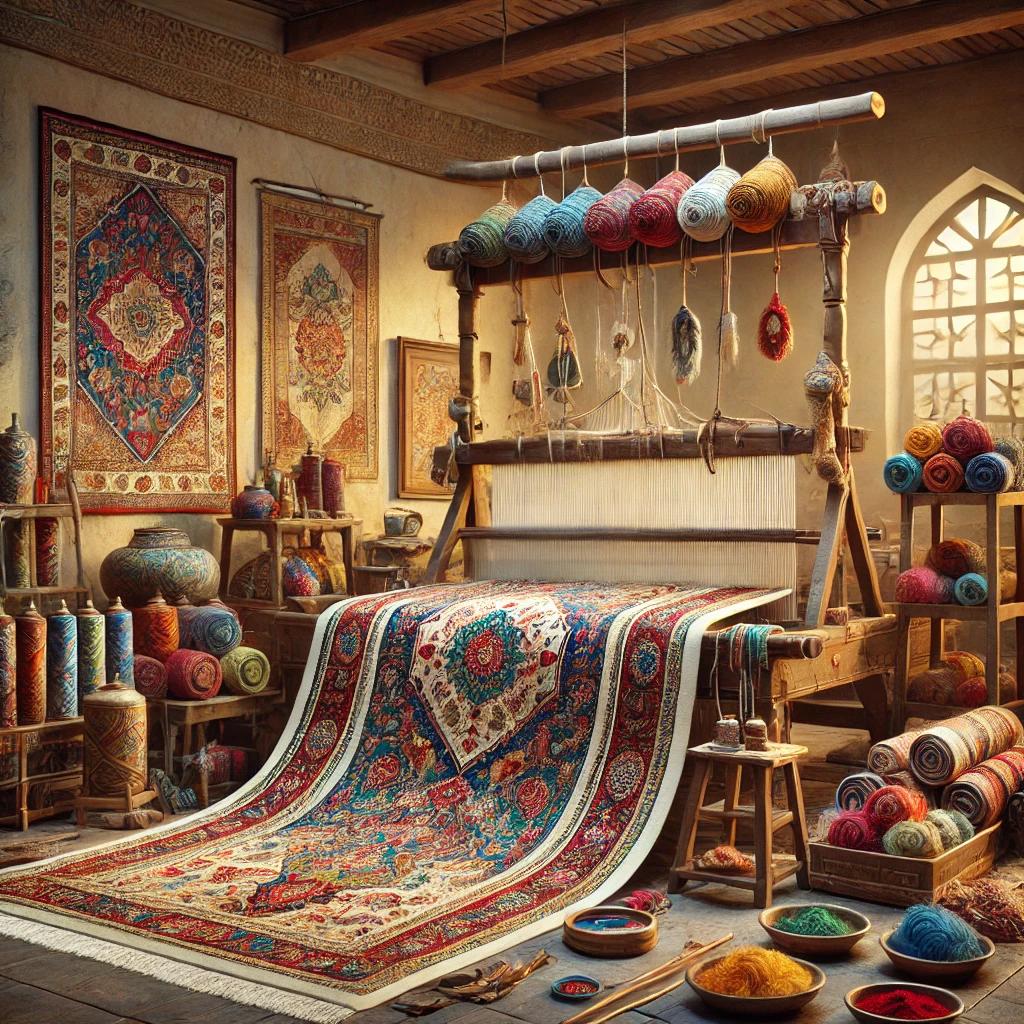
Weaving Steps Overview
The weaving process involves several critical steps:
- Prepare the loom and warp the foundation.
- Insert initial wefts for stabilization.
- Tie rows of wool, cotton, or silk knots by hand .
- Use a comb beater to pack the rows, ensuring density and durability.
- Regularly insert wefts to lock knots and build the structure.
- Finalize by trimming, washing, and stretching the finished rug.
How Material Influences Technique
The choice of materials directly impacts the knotting techniques employed:
- Silk rugs require finer threads, which enable very tight knotting and high knot counts, often favoring asymmetrical knots.
- Wool rugs, on the other hand, are generally crafted with thicker yarns that accommodate bolder motifs.
The combination of knot type, foundation material, and pile fiber is fundamental to defining the texture, durability, and level of detail within each rug.
Traditional Oriental Aesthetics
Core Characteristics of Traditional Oriental Rugs
“Oriental rugs” encompass hand-knotted carpets from regions including Iran, Turkey, the Caucasus, Central Asia, India, and China. These carpets share defining features:
- Reliance on natural materials such as wool, cotton, camel hair, and silk.
- Employment of hand-knotted construction, featuring either Persian or Turkish knots.
- A strong focus on pattern symmetry, borders, and centrally placed medallions or all-over designs.
Despite their regional differences, Persian and Turkish carpets fall under the broader umbrella of oriental aesthetics.
Cultural and Historical Influences
The creation of oriental rugs is steeped in cultural history:
- Nomadic Traditions (tribal rugs) favored geometric and symbolic patterns, crafted on portable looms.
- Urban workshops refined complex floral and garden designs for grand settings.
- Religious symbolism often emerges in motifs reflecting paradise gardens and protective symbols.
Trade contributed to the transmission of both patterns and techniques, allowing local weavers to adapt global influences to their unique materials and cultural narratives.
Traditional Motifs and Their Significance
Common designs within oriental carpets include:
- Central medallions in layered borders.
- Unique patterns, such as Herati, boteh (paisley), and floral vines, prevalent in Persian city rugs.
- Geometric shapes like stars and diamonds are typical of tribal and several Turkish carpets.
These motifs, executed with varying color palettes and materials, represent the profound aesthetic of oriental artistry.
Turkish Vintage and “Rug in Turkish”
Turkish Vintage Rugs: A Notable Transition
Discussing Turkish vintage rugs introduces terms like “turkish vintage” and “rug in turkish,” which often refers to older hand-woven Turkish carpets, primarily produced with wool on cotton or wool foundations and knotted with the symmetrical Turkish (Ghiordes) knot.
Characteristics and Historical Significance of Turkish Vintage Rugs
Regions like Hereke, Oushak, Konya, and Kayseri are notable for their production of vintage pieces that hold significant cultural and historical value.
- Distinct characteristics include:
- Use of the symmetrical Turkish knot, creating a sturdily packed pile.
- A strong emphasis on geometric motifs, stylized flowers, and prayer-rug designs with arch features.
- Craftsmanship reflecting local wools and natural dyes, yielding unique palettes that age beautifully.
Comparing Turkish and Persian Techniques and Styles
| Aspect | Persian Rugs | Turkish Rugs |
|---|---|---|
| Knot Type | Often employs asymmetrical (Persian/Senneh) knots. | Primarily features symmetrical (Turkish/Ghiordes) knots. |
| Materials | Wool, silk, cotton; often uses silk for fine city pieces. | Wool piles on cotton/wool foundations; silk in upscale pieces. |
| Design Style | Floral, curvilinear, complex medallions, and garden themes. | More geometric designs with stylized motifs varying by region. |
| Textural Feel | Ranges from thick tribal wool to ultra-fine silk rugs. | Stands out for a robust and comfortable wool texture. |
Both Persian and Turkish rugs excel in natural fibers and hand-knotting, but the chosen knot type and design vocabulary create distinct identities.
Vintage Rugs USA: Trend, Demand, and Modern Connections
Rising Trend for Vintage Rugs in the USA
In recent years, the USA has experienced a surge in demand for vintage and antique oriental rugs, with both Persian and Turkish pieces gaining popularity.
Buyers highly value:
- Authentic craftsmanship, evident through hand-knotted construction and natural fiber use.
- Unique character inherent in handmade rugs, making no two alike.
- Sustainability as reusing and cherishing vintage rugs aligns with user preference for durable, ethically made goods.
Market Demand and Collector Interests
Collectors and design-savvy buyers are guided by:
- Named origins that trace back to notable weaving regions, such as Qom or Oushak.
- Material quality, focusing on how fine wool, pure silk, and stable cotton foundations correlate with value.
- Condition versus patina, where some visible wear can enhance desirability.
Cultural and Artistic Value in Contemporary Design
Whether regarded as Persian or Turkish, vintage rugs in the USA are:
- Cultural artifacts reflective of nomadic, artisanal traditions and rich stories.
- Art objects, where the craftsmanship, color harmony, and tradition create a multi-layered appreciation extending beyond mere decoration.
This duality, serving as both functional items and pieces of art, allows vintage rugs to coexist gracefully within contemporary interior settings.
Authentic Rugs and Art: Why Authenticity Matters
The Significance of Authenticity
In the realm of rugs, authenticity embodies:
- Hand-knotted techniques as opposed to machine-made reproductions.
- Usage of natural materials, ensuring a sustainable approach.
- Clear connections to identified weaving traditions or regions, emphasizing cultural heritage. .
Authentic rugs deliver:
- Higher artistic value since they reflect the individual weaver’s skill and often utilize complex designs.
- Longevity, made from robust natural fibers, can retain structural integrity for generations.
- Stronger investment potential, especially valuable when sourced from renowned workshops or accompanied by documented provenance.
The Art of Hand-Crafted Rugs
The artistry involved in rug making consists of:
- Crafting the pattern designs on graph paper (cartoons) as blueprints for the weaving process.
- Manipulating and dyeing fibers using plant-based and mineral dyes.
- Tying each knot by hand, each rug potentially taking months or years to complete, especially for significant or finely woven pieces.
This meticulous process underscores the notion that each authentic silk Persian or wool Persian rug is akin to a time-consuming, highly skilled work of art, closely resembling paintings or sculptures in creative and cultural value.
How Material and Style Shape the Global Narrative of Rug Art
Each discussed material and stylistic influence contributes to the storytelling legacy of rug artistry:
- Silk Persian rugs showcase ultimate fineness, sheen, and detail, epitomizing luxury and urban ingenuity.
- Wool Persian rugs express warmth, durability, and everyday beauty, particularly within tribal contexts.
- Oriental aesthetics intertwine both Persian and Turkish traditions through shared motifs and techniques, creating distinct but complementary narratives.
- Turkish vintage rugs introduce geometric elegance and regional cachet, enriching the broader interpretation of oriental designs.
- The expanding vintage rug culture in the USA ensures these traditions remain vibrant, acknowledged, and nurtured in contemporary design.
Together, these threads weave a global narrative of textile art, where materials, techniques, and cultural expressions intersect to craft a rich tapestry of history.
Conclusion: Bringing It All Together
In conclusion:
- Silk Persian rugs are noted for their fine silk fibers, high knot density, and intricate designs that speak to a history steeped in elitism and luxury.
- Wool, serving as the foundational element in most Persian rugs, is treasured for its durability, warmth, and versatility.
- The traditional weaving techniques, including warps, wefts, and Persian/Turkish knots, dictate the rug’s texture, longevity, and visual detail.
- Oriental aesthetics unify the diverse traditions of Persian and Turkish designs, while unique capabilities found in Turkish vintage rugs add layers to the conversation.
- In markets like the USA, there is a growing appreciation for vintage Persian and Turkish rugs, emphasizing authenticity, cultural depth, and aesthetic balance in modern décor.
For readers wishing to deepen their engagement with Persian and Turkish rugs, it becomes essential to grasp the intricacies of materials, origins, techniques, and the authentic qualities that transform beautiful textiles into cherished art. Whether it’s a luxurious silk Persian showpiece or a well-aged Turkish vintage rug, understanding these elements is your guide to appreciating the rich tapestry of rug culture and its lasting beauty.